Skip to content
Artwork for After Coding - A podcast by Pebblebed
TechnologyBusinessInvesting

After Coding - A podcast by Pebblebed

Pebblebed

Daddy, what was vim?

For the last 80 years, the motive force of the computer revolution has been coding: the creation of software in formal languages by technical professionals exerting their intellect and their fingers. Sometime in 2025, this changed. To the extent coding remains a human activity, it is now education, craft, or leisure. The economically consequential coding is done by LLMs.

Keith Adams spent most of his waking hours coding, at VMware, Facebook, and Slack. You have run his code, probably today. He is also one of the generations of engineers whose work trained the clankers we now hand the keyboard to.

On After Coding, Keith sits down with the people who still think hardest about software to ask what the discipline becomes once the typing is no longer the point.

Play
  • 5 episodes
  • fortnightly
  • Avg 52 min
  • English
  • #5
    November 17 · 43 min

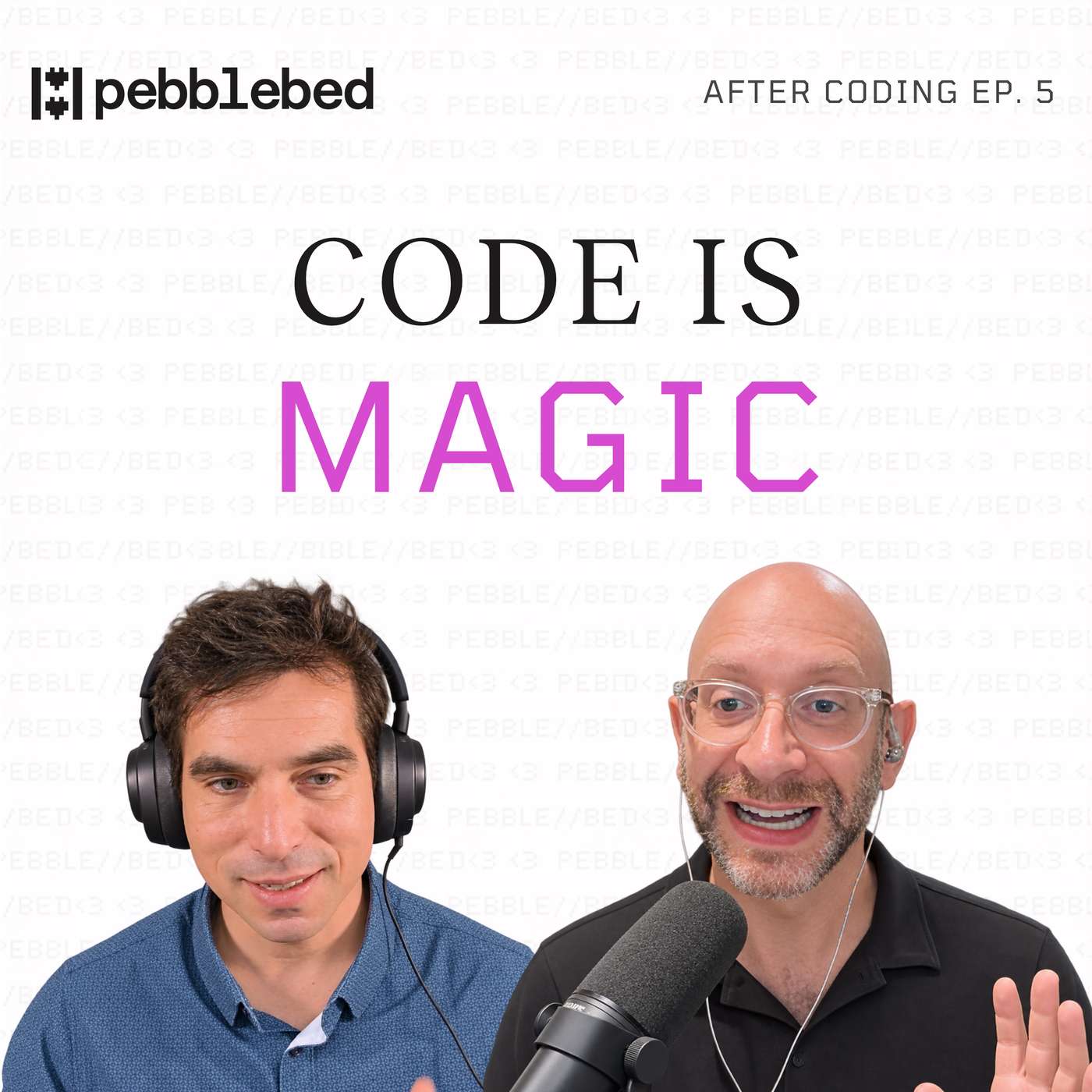
    Is Coding Becoming Magic? Sam Arbesman on AI, Creativity & the Future of Software

    If AI writes most of the code, what happens to programming skill? Sam Arbesman, scientist-in-residence at Lux and author of The Magic of Code, argues the opposite of what most people expect: AI won't erase skill, it will amplify it. And the people who are already good will pull away. In this After Coding conversation, Sam walks Keith through why computing should be taken seriously as magic and as a humanistic liberal art: connecting to language, philosophy, biology, and art. From HyperCard's "low floors and high ceilings" to today's generative AI, he traces a long tradition of democratizing software creation, and asks how we avoid building systems we can no longer understand. Key questions in this episode: Why does treating code as magic cut off questioning; whether from awe or despair? How do we respond to systems that are increasingly complex and incomprehensible, even to experts? When is a model's purpose prediction, and when is it understanding? What are "mesofacts"? Sam also discusses his new book The Magic of Code, his earlier book Overcomplicated, and where computation fits into how we think about reality itself. Hosted by Keith Adams, After Coding is a Pebblebed podcast about how elite engineers build now that AI writes the code. New episodes every other week. Subscribe for the next conversation. ABOUT OUR GUEST Sam Arbesman is a scientist-in-residence at Lux Capital and author of The Magic of Code, Overcomplicated, and The Half-Life of Facts. His work explores the intersections of science, technology, complexity, and human curiosity. Explore more of Sam's writing and newsletter: https://arbesman.net — About Keith Keith built the HHVM JIT compiler at Facebook, helped virtualize the world at VMware (employee ~80), and went on to Slack before founding Pebblebed, an early-stage VC firm for technically ambitious founders. — ✅ Stay Connected With Us: Instagram: @pbd.vc/ X: x.com/pebble_bed Spotify: https://open.spotify.com/show/2Zt9Jjb... Apple podcast: https://podcasts.apple.com/us/podcast... LinkedIn: linkedin.com/company/pebblebed future of coding, coding, artificial intelligence, programming, software engineering, ai agents, future of programming, ai coding tools, computer science, future of work, generative ai, llm, after coding, pebblebed podcast, philosophy of technology #coding #ai #programming #artificialintelligence #softwareengineering

    • Transcript
    • Chapters
  • #4
    November 3 · 45 min

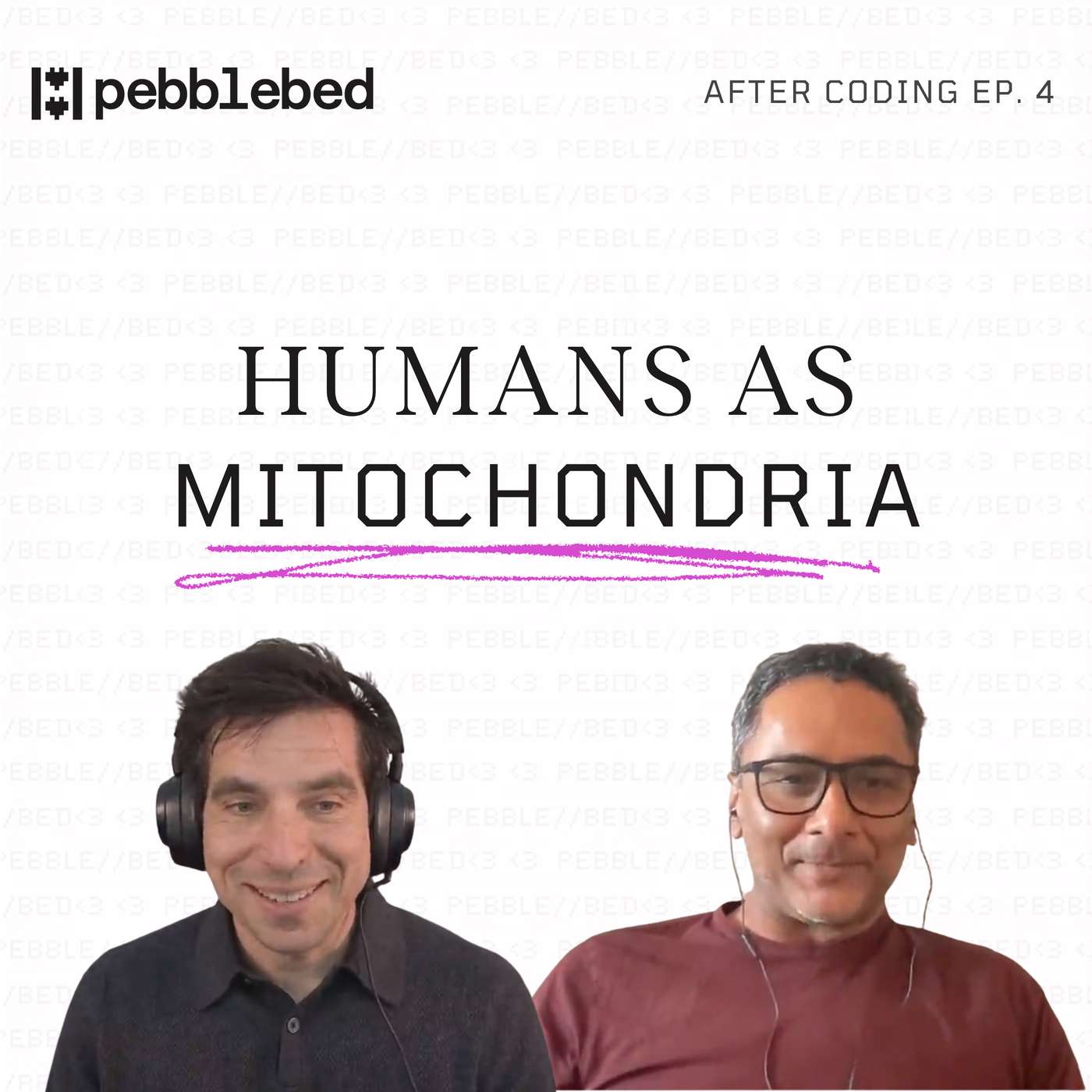
    Venkat Rao on AI "Accents," the Playable Universe, and the Frontier Model Panic

    Venkat Rao (Ribbonfarm, Contraptions) joins Keith to apply a control-theory and systems-engineering lens to the current AI discourse. Moving past the standard frontier-model panic, Venkat explains why a domain's "playability" matters more than raw compute, and why he fully embraces the much-maligned "AI accent" in his own writing. They explore what decades of superhuman chess engines can teach us about the future of programming, how protocols act as hard interfaces to trap flexible intelligence, and Venkat’s provocative theory that humanity's evolutionary trajectory is to become the "mitochondria" to AI's nucleus—surrendering computation to the machine while retaining liveness, stakes, and taste.

    • Transcript
    • Chapters
  • #3
    October 19 · 39 min

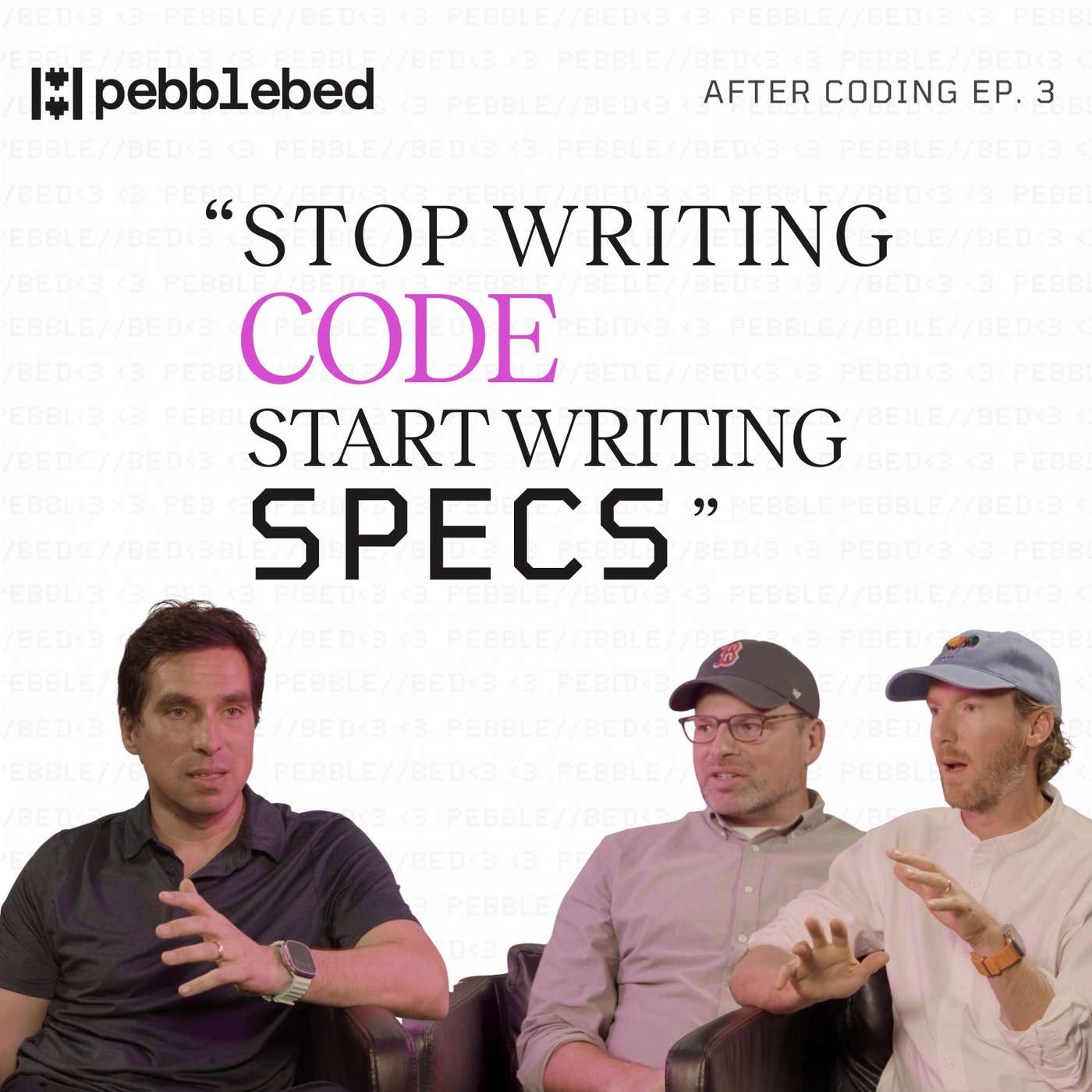
    Slack Employee #1 Johnny Rodgers & Jimmy Scheinblum: The Limits of AI Engineering and Launching Supernice

    In this episode of After Coding, Keith Adams sits down with James Scheinblum (Jamie/Jimmy) and Johnny Rodgers (JR), co-founders of Supernice. JR was Slack's first employee and a founding team member, and Jamie was one of the company's earliest engineers. We are moving past the era of typing syntax and into the era of managing systems. Jimmy and JR walk through how they have completely abandoned manual coding for a pure agent-driven workflow, explaining why the traditional "first commit" is dead and how a living folder of agent-readable specs serves as their new source of truth. In this episode, we cover: • Leaving Slack to build Supernice with a greenfield, AI-first setup • Moving from manual syntax to a "spec-driven" engineering workflow • How AI agents eliminate stale tech documentation and tribal knowledge • Why LLMs replaced traditional debuggers in daily development • The search for software’s "Move 37" and why AI can’t fake product taste • Shift in technical careers: Why all roles are collapsing into the "Product Engineer" Connect with Pebblebed & After Coding: • Website: https://pebblebed.com

    • Chapters
  • #3
    October 5 · 50 min

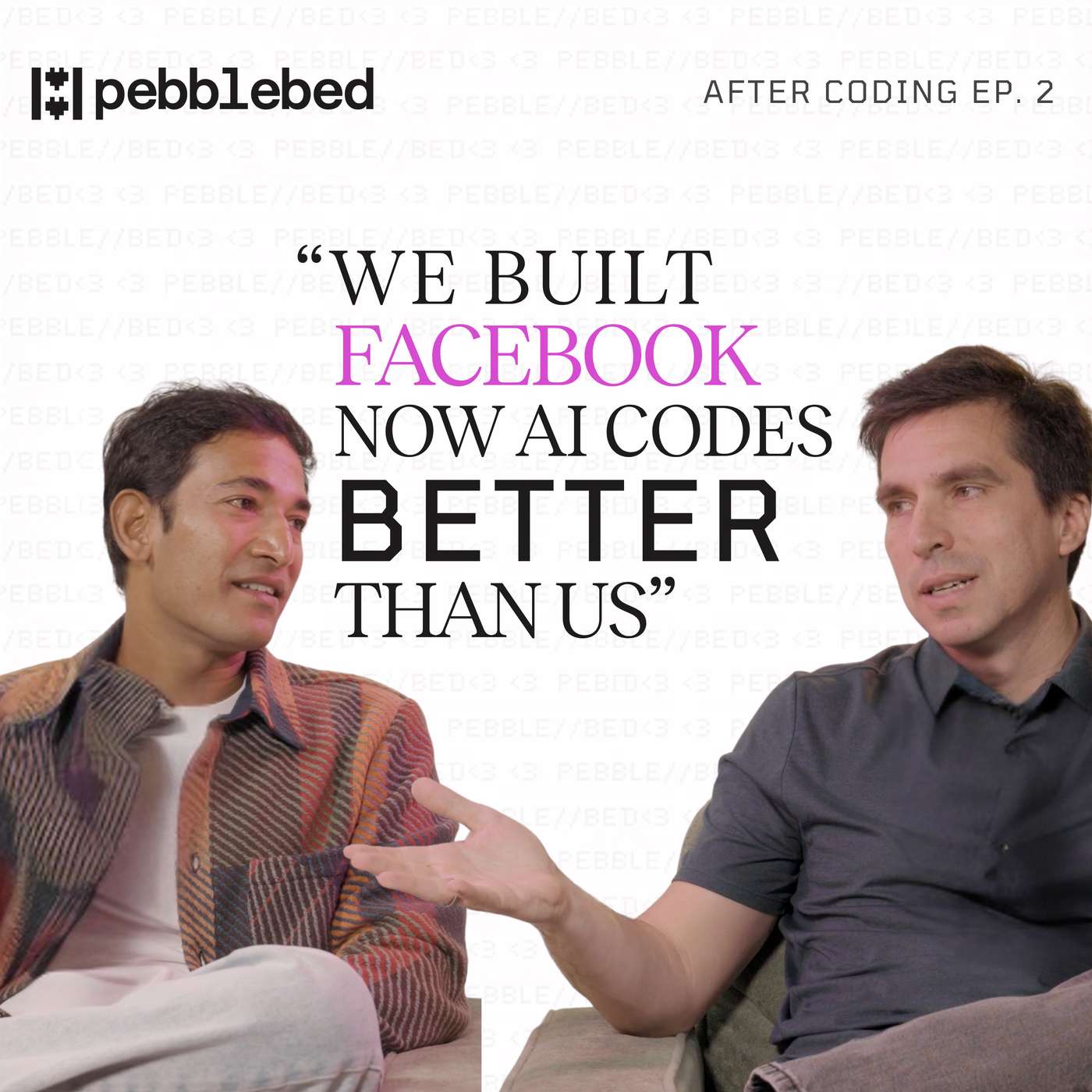
    From Facebook's First Hires to VCs: Surviving the End of Human Coding

    For 20 years, Keith Adams and Aditya Agarwal built the foundations of Web 2.0 at companies like Facebook, Slack, and Dropbox. Now, as venture capitalists, they are navigating a wild new reality: the machines can code better than they can. In the second episode of After Coding, Keith sits down with Aditya (his first boss at Facebook, now a partner at South Park Commons) to unpack the genuine grief of seeing AI master the craft they built their identities on and the exhilarating burst of building that followed. They discuss the awkward dilemma of raising 10-year VC funds during a technological tsunami, why nobody actually knows what a great software company looks like anymore, and why human typos carry a premium in a world of infinite AI generation. After Coding is a new podcast from Pebblebed hosted by Keith Adams, exploring how we think, talk, and build in a world where the machines write the software.

  • #1
    September 17 · 1 hr 23 min

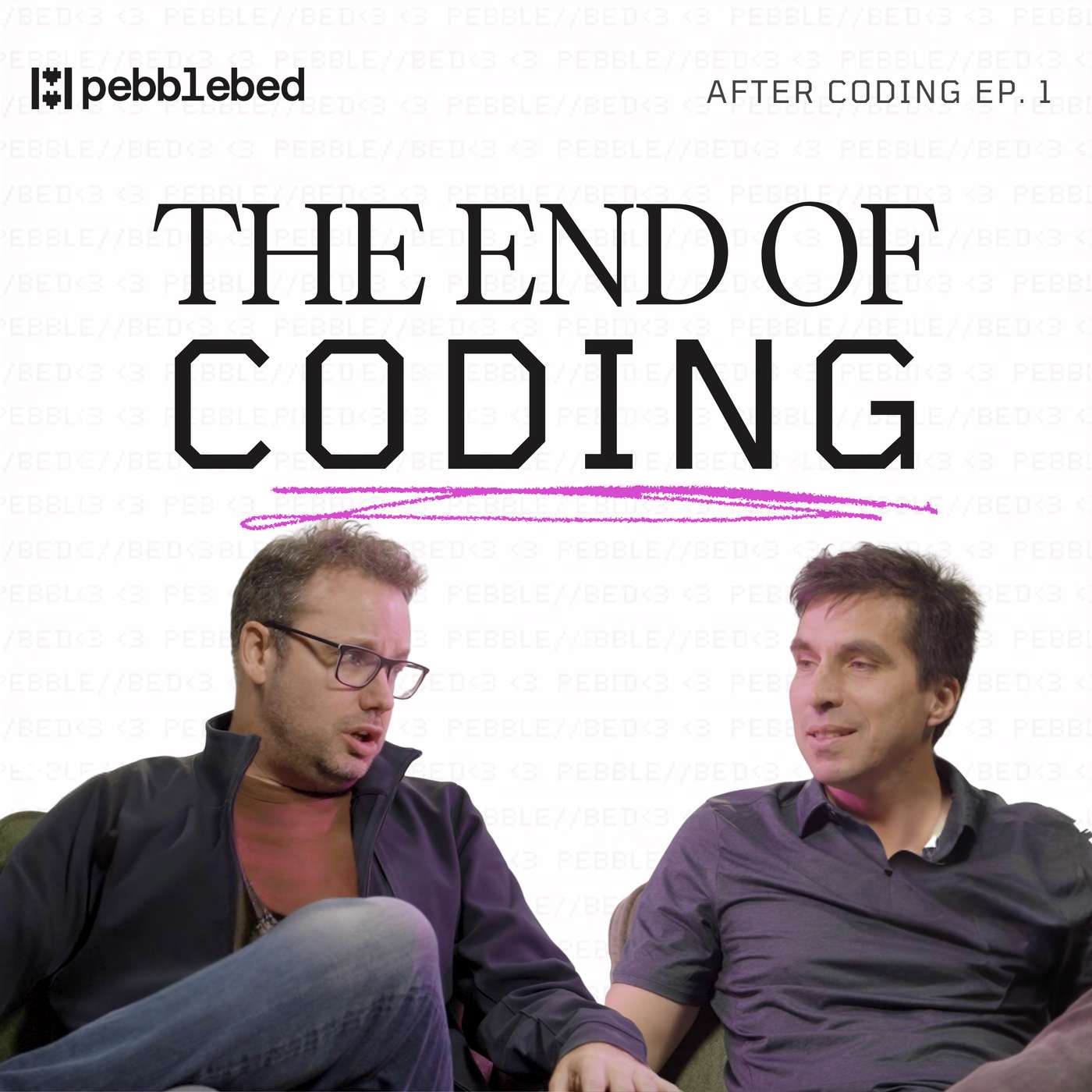
    Josh Wills on the End of Coding

    Josh Wills has shipped code you ran today: Google's ad auction, Slack, and now the data pipelines that train foundation models at Datology. He also barely touches a keyboard anymore. His argument is that this is fine, because writing code was never the job. Understanding the problem was, and review is how a senior engineer proves it. We work through where taste comes from when nobody writes first drafts, why agent-written pipelines run correctly at forty times the cost, why mathematicians are now going through the grief programmers went through a year ago, and whether software will ever get its AlphaZero moment: an engine that teaches us something new about how to build a database, rather than a very fast slot machine trained on ourselves. Also: chess bots that finally feel human, the beer emulator, and why typos are now proof of work. Chapters 00:03:59 — Josh's daily practice, and the week it clicked 00:13:37 — Review was always the job 00:18:16 — Math's turn: proofs that work but aren't beautiful 00:24:48 — Agent-written pipelines: correct, and comically expensive 00:35:07 — Chess bots that feel human 01:01:20 — Is there a Stockfish for software? 01:13:08 — Prose as proof of work 01:16:33 — Paid to understand problems After Coding is hosted by Keith Adams of Pebblebed.

    • Chapters
Showing 1–5 of 5 episodes