Skip to content

Earth Sciences

Every show filed under earth sciences, ranked by what listeners actually play.

217
shows
0
subcategories
1
new this week

Most subscribed

audio · in earth sciences · refreshed hourly

Newest episodes

audio · last seven days
  • Breaking Down: Collapse

    Daily Episode 291: Electric cooling overtakes heating

    For the first time ever, electric cooling needs have overtaken electric heating needs globally. This will continue to shift as developing nations increase their use of air conditioning, and as the world continues to get warmer. The IEA says cooling needs are overtaking heating for the first time - MACCUS Please join us on Patreon for weekly bonus content and to join our Discord community. Hosted on Acast. See acast.com/privacy for more information.

    Today · 14 min
  • Klimanachbarn – Die Revolution beginnt nebenan

    E62: Die Alltagsfrage - Elektroautos

    Sind sie wirklich teurer, neu und gebraucht?

    Today · 22 min
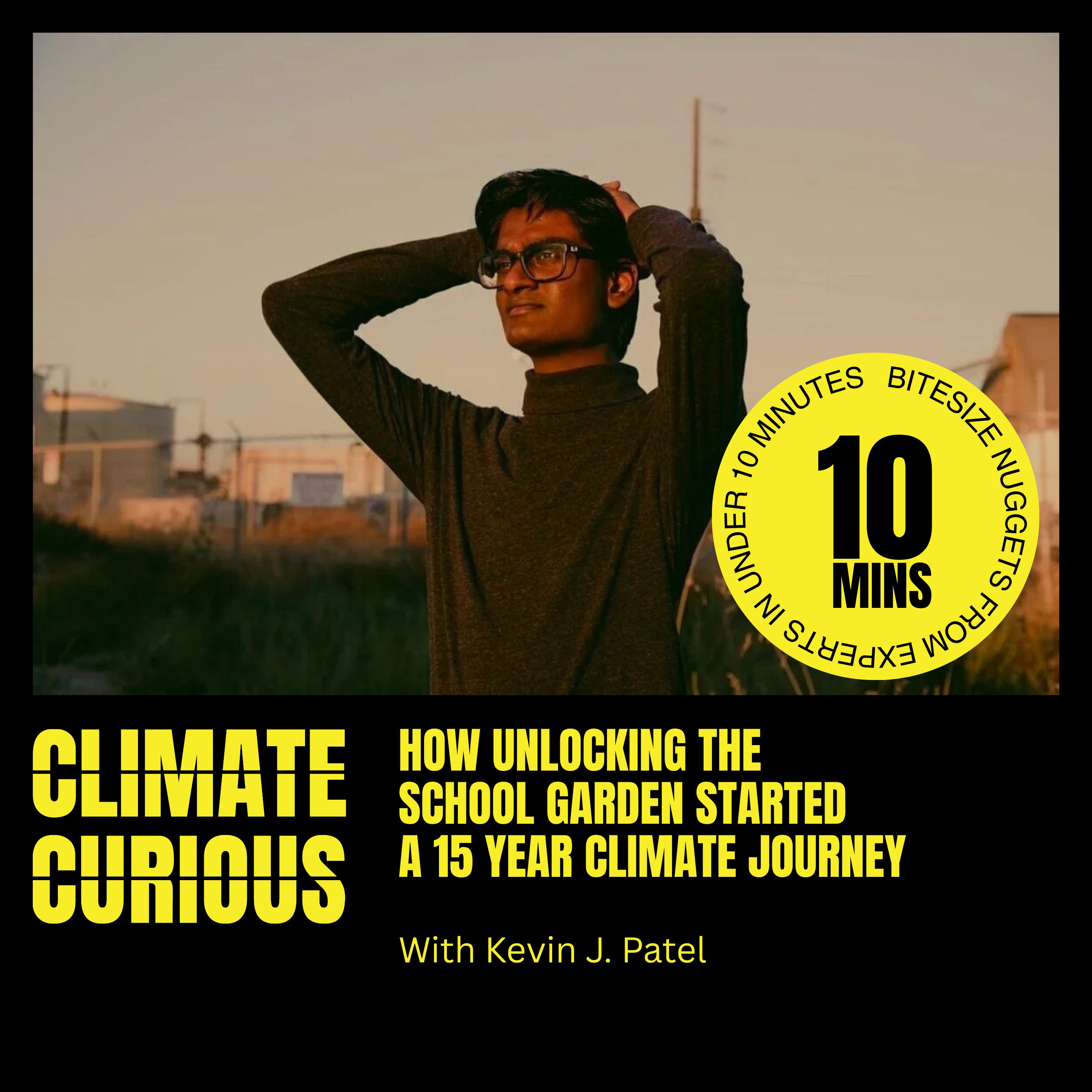
  • Climate Curious

    How unlocking the school garden started a 15 year climate journey, with Kevin J. Patel

    “When people don't know where their food comes from, they're not connected to the land… I wanted to give them that connection to nature,” says youth climate activist and founder of Earth Era Institute, Kevin J. Patel. Inspired by his family’s green thumbs, and fighting a life-threatening illness caused by air pollution, Kevin took agency with his schoolmates by asking one simple question one day at school: “where’s the key to the garden?” Tune in with Climate Curious co-host Ben Hurst to hear Kevin’s story of climate agency, and why he’s now channeling his energy into new projects, namely the Earth Era Institute. Recorded live at Climate Week NYC. Enjoyed this short? Listen to the full episode, ‘How to step into your Earth Era’: https://tedxlondon.com/podcasts/how-to-step-into-your-earth-era-with-kevin-j-patel/ Learn more about the Earth Era Institute: http://www.eartherainstitute.org Follow Kevin J. Patel on Instagram: https://www.instagram.com/imkevinjpatel Follow Kevin J. Patel on LinkedIn: https://www.linkedin.com/in/imkevinjpatel/ Join the Climate Curious conversation on socials: Instagram: https://www.instagram.com/climatecuriouspod/ TikTok: https://www.tiktok.com/@climatecuriouspod YouTube: https://www.youtube.com/channel/UCtF6xzNkVIczlDmVcH8FCMA LinkedIn: https://www.linkedin.com/company/10996041/ Facebook: https://www.facebook.com/TEDxLondon Website: https://tedxlondon.com/podcast/ All other links: https://linktr.ee/climatecuriouspod Created by TEDxLondon Executive produced by Josie Colter Produced by Ben Beheshty Curated by Deesha Chandra Hosted by Maryam Pasha and Ben Hurst Communications by Tara Cooper Hosted on Acast. See acast.com/privacy for more information.

    Today · 7 min
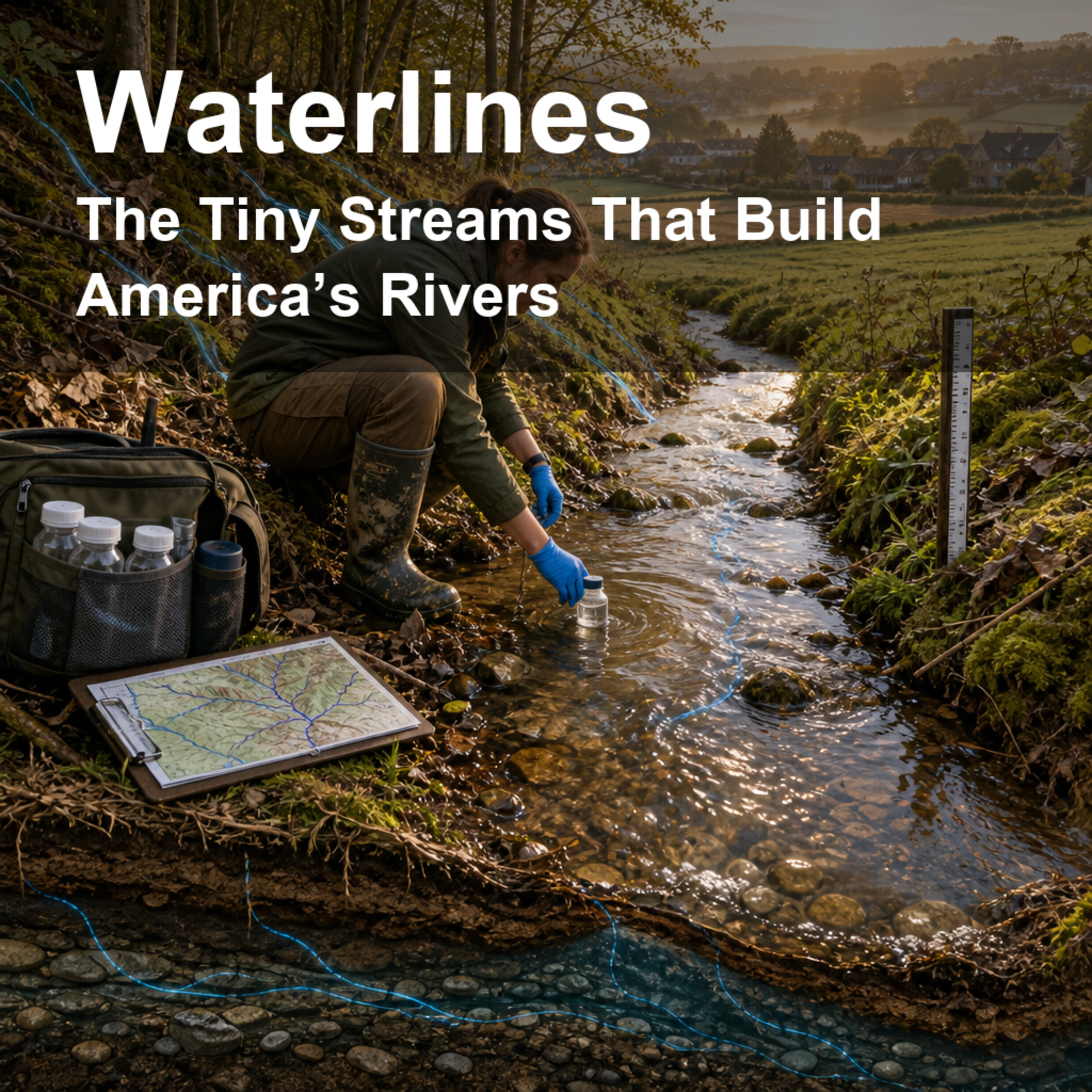
  • Waterlines: How Water Shapes Our World

    The Tiny Streams That Build America’s Rivers

    Takeaway: Most of America’s river miles begin as small headwater streams, and their hidden branches drain nearly three quarters of the land before water reaches bigger rivers. Before water reaches a river big enough for a bridge, a boat, or a city intake pipe, it usually begins in narrow headwater streams: the small channels you can step across, sometimes hidden in forests, farms, deserts, and neighborhoods. This episode follows a new continental mapping effort that asks a deceptively simple question: where are those beginnings? The answer matters for flood behavior, drinking-water sources, nutrient pollution, habitat, land planning, and how communities understand the waters they depend on. We unpack how researchers used a high-resolution U.S. hydrography map to identify first- and second-order streams across the conterminous United States, creating a new dataset called HELiOS, for HEadwater streams and Low-Order Systems. Their estimate: about 8.4 million kilometers of headwater streams, roughly 77% of mapped stream length, draining more than 73% of the land area studied. We also talk about why mapping small streams is hard, why some mapped lines may be missing or overcounted, and why forests, shrublands, farms, wetlands, and cities all show up in this headwater story. Citation: Lane, C. R., D’Amico, E., Christensen, J. R., Golden, H. E., Cheng, F. Y., Hammond, J. C., Husic, A., Jaeger, K. L., Jones, C. N., Kelleher, C. A., Li, L., Mahoney, D. T., McMillan, H. K., Price, A. N., Sando, R., Segura, C., Seybold, E. C., Ward, A. S., & Zimmer, M. (2026). Identifying Headwater Streams across the Conterminous United States. Ecosystems, 29, 22. https://doi.org/10.1007/s10021-025-01041-z Disclosure: This Waterlines episode uses AI-generated voices for the host conversation.

    Today · 11 min

Audio in Earth Sciences212