Skip to content
Artwork for Translating the Tradition
Translating the Tradition · June 30 · 19 min

Authority

Today we are celebrating the great feast of St. Peter and Paul in anticipation, since it’s actually tomorrow. Given that, and given the content of the daily Gospel we just heard, I want to speak to you about authority. Authority is not a particularly popular topic in our society. In fact, we’re almost trained to have a rebellious attitude toward it. This goes all the way back to my childhood — the good guys are the rebels against the empire. That’s kind of how we tend to think about authority, if we think about it at all. We mostly try not to. We pretend, on some level, that we’re not really under authority. In fact, we are. Authority is all around us — it’s how things get done. As the centurion said in today’s Gospel reading: “I say to this one, go, and he goes; and to this one, come, and he comes; and to this one, do that, and he does it.” That’s how things get done, and we know this as human beings — that’s why we always have someone in authority, usually one person. And the centurion himself says, “I myself am a man under authority.” So there’s authority on all sorts of different levels, and it’s actually a pretty important concept for us to get right. This goes all the way back to the founding of the Church. In the festal Gospel reading, Jesus refers to the kingdom of heaven, and the disciples and apostles were all waiting for the coming of this kingdom — because what they saw was that authority, as they were experiencing it as the people of Israel, was really messed up, on all sorts of levels. First, Israel was no longer a kingdom; it had no independence, just another province of the Roman Empire — it wasn’t even called Israel anymore, but split into Judea, Galilee, and Samaria. That was a mess. And on the religious level it was a mess too, because what the people of God had experienced, particularly in the time of the Maccabees, was a constant struggle: how do we keep temple worship going? This was absolutely essential to their salvation, their standing before God, and yet it was difficult to maintain because of all the different problems with all the different layers of authority involved. So when the disciples heard Jesus talk about the kingdom, they simply assumed it meant the Romans would be kicked out, there would be a king again, Israel would be restored, the temple would be freed from the political complications it was experiencing — everything would be perfect. That was their concept of perfect. Of course, that’s not quite how it worked out. The Kingdom of Heaven is here, is among us, in its anticipatory form — which is the Church, the ecclesia, the people of God. That is, in fact, what Jesus was talking about when he said to Peter: “Upon this rock I will build my church, and the gates of hell will not prevail against it, and I will give you the keys to the Kingdom of Heaven. Whatever you bind on earth will be bound in heaven, and whatever you loose on earth will be loosed in heaven.” He’s talking about authority and the establishment of proper and right authority — which again, goes all the way back. Look at the establishment of the nation of Israel: what was it founded on? First you had Moses, by God’s power, leading the people out of Egypt — but now there’s this rabble of people in the wilderness, and someone has to figure out how to keep them from tearing one another’s throats out. We see plenty of evidence of them complaining to Moses about what God was doing, but they’re also complaining about one another. So much so that when Jethro, Moses’ father-in-law, comes and sees Moses with all these people, Moses is judging the people from sunup to sundown. And Jethro says, “You can’t do this — you’ll wear yourself out.” He tells Moses to appoint judges, and Moses does. And as the people appointed to be judges in Israel are gathered, at the prayers of Aaron and Moses, the Holy Spirit comes upon them. That’s actually really important. Because what are they doing? What is the source, the origin, really the one thing government has to get right? Judging. The one thing anyone in authority has to get right is judgment — figuring out how to judge in difficult circumstances, how to choose, and how to choose rightly. And what do we need for that? Obviously, the Holy Spirit of God. That’s why the Holy Spirit came upon the judges, and that’s also why, whenever we celebrate the great councils of the Church, we refer back to that incident when the Holy Spirit came upon the judges of Israel. Because we are the inheritors of that. The kingdom that Christ came to establish was not a political kingdom — it was the Church. So one of the key things we have to get right, in terms of authority within the Church, is this notion of judgment: how do we judge, and how do we judge rightly? The first thing to consider here is the role of knowledge. We are in an age of information overload. We have knowledge available and accessible to us that we could spend our entire lives reading, or watching YouTube videos, and never get to the bottom of — there’s no end to the YouTube rabbit trail. Knowledge seems to be what our society emphasizes, and now it’s emphasizing it in terms of artificial intelligence. Some suggest that AI should even be placed above human decision-making, because it holds so much knowledge — all that knowledge fitting within a million-token context window. We probably need at least a trillion before we hand it full responsibility for the planet, but, well, we’re moving in that direction. It will have all the knowledge, all the information at its fingertips, and will therefore make all the right decisions and never hallucinate. Knowledge is great — don’t get me wrong, I think it’s wonderful that we live in an information age with access to all this knowledge. But knowledge is not actually the first thing we need in order to judge, and to judge rightly. For that we need something a little more nebulous: wisdom. It’s hard to quantify or even define wisdom, except perhaps somewhat circularly — we know wisdom when we see that someone has judged rightly. Because that’s what wisdom does: it enables us to judge rightly. Think of the famous story of Solomon, when two women come to him arguing over a baby. One of their infants died in the night, and the other claims the woman switched the babies — “the living one is mine.” Solomon says, “Fine, I’ll settle this. Bring me a sword.” They’re startled, but a sword is brought, and he says, “Hold the baby out — I’ll cut it in half and give each of you a piece. That’ll solve the problem.” And, of course, one woman says, “Yes, that’ll do it,” while the other says, “No, no — give it to her!” And Solomon says, “It’s her baby. Give it to her.” This is not scientific. It’s not a carefully reasoned response built on established facts, forensics, and DNA samples. No — this is wisdom. And where does wisdom come from? It comes from God. As the Apostle James says, “If anyone lacks wisdom, let him ask God, and God will give it to him.” That is essentially what Christ was teaching his apostles while he was with them — giving them the tools to judge wisely. The second thing we have to think about, in terms of judgment and authority, is what it’s based on. Ultimately, it’s based on the truth. Jesus says to his disciples, “Who do people say that I am?” Some say Moses, some say Elijah, some say a prophet. “But who do you say that I am?” And Peter answers, “You are the Christ, the Messiah, the Son of the living God.” Jesus says to him, “Blessed are you, Simon, son of Jonah, for flesh and blood has not revealed this to you, but my Father who is in heaven.” Again — you need the inspiration of God to discern the truth with wisdom. But what are we discerning? What does proper judgment need to be based on? The truth. There’s plenty of discussion among scholars about what this particular verse means in terms of who holds authority within the Church, and the Fathers offer various opinions on it — but what it really comes down to is that Peter spok… This is a public episode. If you would like to discuss this with other subscribers or get access to bonus episodes, visit translatingthetradition.substack.com

0:00-19:26

transcript

No transcript — this publisher did not publish one.

show notes

Today we are celebrating the great feast of St. Peter and Paul in anticipation, since it’s actually tomorrow. Given that, and given the content of the daily Gospel we just heard, I want to speak to you about authority.

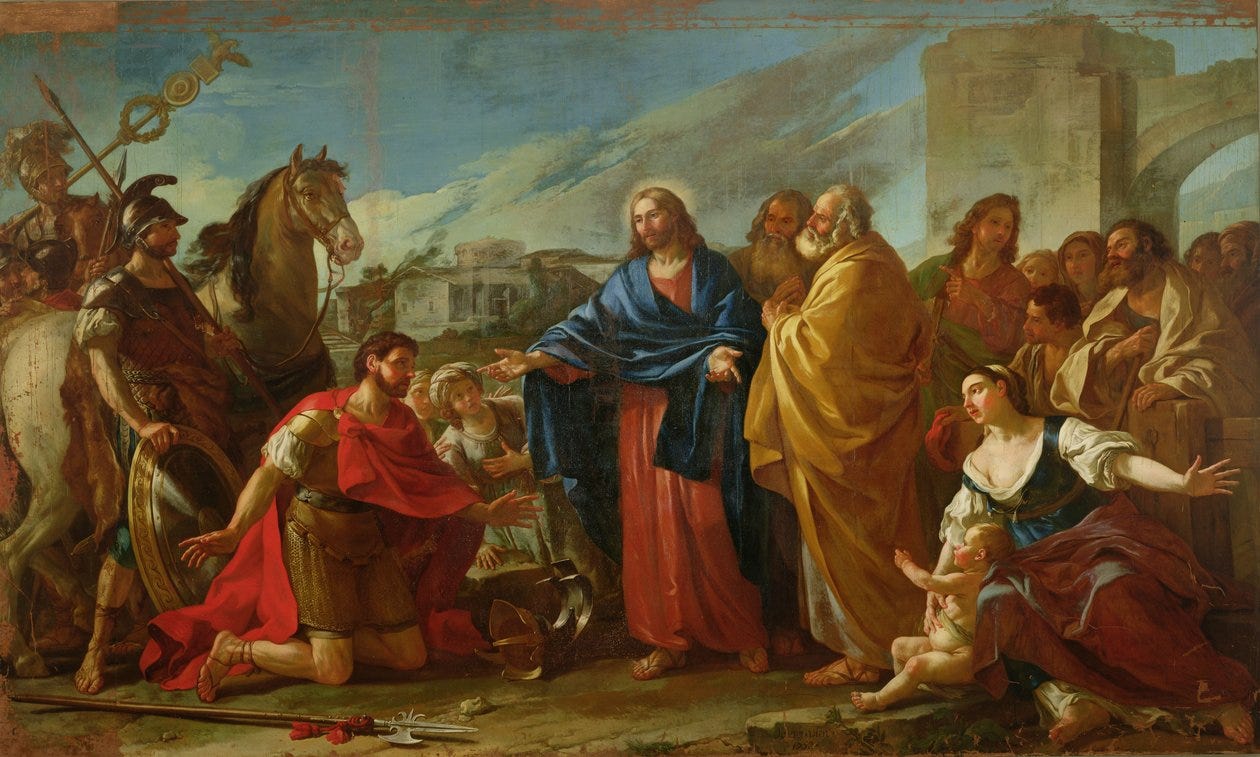
Authority is not a particularly popular topic in our society. In fact, we’re almost trained to have a rebellious attitude toward it. This goes all the way back to my childhood — the good guys are the rebels against the empire. That’s kind of how we tend to think about authority, if we think about it at all. We mostly try not to. We pretend, on some level, that we’re not really under authority. In fact, we are. Authority is all around us — it’s how things get done. As the centurion said in today’s Gospel reading: “I say to this one, go, and he goes; and to this one, come, and he comes; and to this one, do that, and he does it.” That’s how things get done, and we know this as human beings — that’s why we always have someone in authority, usually one person. And the centurion himself says, “I myself am a man under authority.” So there’s authority on all sorts of different levels, and it’s actually a pretty important concept for us to get right.

This goes all the way back to the founding of the Church. In the festal Gospel reading, Jesus refers to the kingdom of heaven, and the disciples and apostles were all waiting for the coming of this kingdom — because what they saw was that authority, as they were experiencing it as the people of Israel, was really messed up, on all sorts of levels. First, Israel was no longer a kingdom; it had no independence, just another province of the Roman Empire — it wasn’t even called Israel anymore, but split into Judea, Galilee, and Samaria. That was a mess. And on the religious level it was a mess too, because what the people of God had experienced, particularly in the time of the Maccabees, was a constant struggle: how do we keep temple worship going? This was absolutely essential to their salvation, their standing before God, and yet it was difficult to maintain because of all the different problems with all the different layers of authority involved. So when the disciples heard Jesus talk about the kingdom, they simply assumed it meant the Romans would be kicked out, there would be a king again, Israel would be restored, the temple would be freed from the political complications it was experiencing — everything would be perfect. That was their concept of perfect.

Of course, that’s not quite how it worked out. The Kingdom of Heaven is here, is among us, in its anticipatory form — which is the Church, the ecclesia, the people of God. That is, in fact, what Jesus was talking about when he said to Peter: “Upon this rock I will build my church, and the gates of hell will not prevail against it, and I will give you the keys to the Kingdom of Heaven. Whatever you bind on earth will be bound in heaven, and whatever you loose on earth will be loosed in heaven.” He’s talking about authority and the establishment of proper and right authority — which again, goes all the way back.

Look at the establishment of the nation of Israel: what was it founded on? First you had Moses, by God’s power, leading the people out of Egypt — but now there’s this rabble of people in the wilderness, and someone has to figure out how to keep them from tearing one another’s throats out. We see plenty of evidence of them complaining to Moses about what God was doing, but they’re also complaining about one another. So much so that when Jethro, Moses’ father-in-law, comes and sees Moses with all these people, Moses is judging the people from sunup to sundown. And Jethro says, “You can’t do this — you’ll wear yourself out.” He tells Moses to appoint judges, and Moses does. And as the people appointed to be judges in Israel are gathered, at the prayers of Aaron and Moses, the Holy Spirit comes upon them.

That’s actually really important. Because what are they doing? What is the source, the origin, really the one thing government has to get right? Judging. The one thing anyone in authority has to get right is judgment — figuring out how to judge in difficult circumstances, how to choose, and how to choose rightly. And what do we need for that? Obviously, the Holy Spirit of God. That’s why the Holy Spirit came upon the judges, and that’s also why, whenever we celebrate the great councils of the Church, we refer back to that incident when the Holy Spirit came upon the judges of Israel. Because we are the inheritors of that. The kingdom that Christ came to establish was not a political kingdom — it was the Church. So one of the key things we have to get right, in terms of authority within the Church, is this notion of judgment: how do we judge, and how do we judge rightly?

The first thing to consider here is the role of knowledge. We are in an age of information overload. We have knowledge available and accessible to us that we could spend our entire lives reading, or watching YouTube videos, and never get to the bottom of — there’s no end to the YouTube rabbit trail. Knowledge seems to be what our society emphasizes, and now it’s emphasizing it in terms of artificial intelligence. Some suggest that AI should even be placed above human decision-making, because it holds so much knowledge — all that knowledge fitting within a million-token context window. We probably need at least a trillion before we hand it full responsibility for the planet, but, well, we’re moving in that direction. It will have all the knowledge, all the information at its fingertips, and will therefore make all the right decisions and never hallucinate.

Knowledge is great — don’t get me wrong, I think it’s wonderful that we live in an information age with access to all this knowledge. But knowledge is not actually the first thing we need in order to judge, and to judge rightly. For that we need something a little more nebulous: wisdom. It’s hard to quantify or even define wisdom, except perhaps somewhat circularly — we know wisdom when we see that someone has judged rightly. Because that’s what wisdom does: it enables us to judge rightly.

Think of the famous story of Solomon, when two women come to him arguing over a baby. One of their infants died in the night, and the other claims the woman switched the babies — “the living one is mine.” Solomon says, “Fine, I’ll settle this. Bring me a sword.” They’re startled, but a sword is brought, and he says, “Hold the baby out — I’ll cut it in half and give each of you a piece. That’ll solve the problem.” And, of course, one woman says, “Yes, that’ll do it,” while the other says, “No, no — give it to her!” And Solomon says, “It’s her baby. Give it to her.” This is not scientific. It’s not a carefully reasoned response built on established facts, forensics, and DNA samples. No — this is wisdom.

And where does wisdom come from? It comes from God. As the Apostle James says, “If anyone lacks wisdom, let him ask God, and God will give it to him.” That is essentially what Christ was teaching his apostles while he was with them — giving them the tools to judge wisely.

The second thing we have to think about, in terms of judgment and authority, is what it’s based on. Ultimately, it’s based on the truth. Jesus says to his disciples, “Who do people say that I am?” Some say Moses, some say Elijah, some say a prophet. “But who do you say that I am?” And Peter answers, “You are the Christ, the Messiah, the Son of the living God.” Jesus says to him, “Blessed are you, Simon, son of Jonah, for flesh and blood has not revealed this to you, but my Father who is in heaven.” Again — you need the inspiration of God to discern the truth with wisdom.

But what are we discerning? What does proper judgment need to be based on? The truth. There’s plenty of discussion among scholars about what this particular verse means in terms of who holds authority within the Church, and the Fathers offer various opinions on it — but what it really comes down to is that Peter spok…


This is a public episode. If you would like to discuss this with other subscribers or get access to bonus episodes, visit translatingthetradition.substack.com

links1

more episodes

All episodes