Skip to content
Artwork for Programming Tech Brief By HackerNoon
TechnologyEducationLanguage Learning

Programming Tech Brief By HackerNoon

HackerNoon

Learn the latest programming updates in the tech world.

Play
  • 91 episodes
  • Avg 17 min
  • English
Counted on this page — what you have heard stays on this device, so it is not something the list can be paged by.
  • September 12 · 19 min

    React Activity: When A Render No Longer Guarantees an Effect

    This story was originally published on HackerNoon at: https://hackernoon.com/react-activity-when-a-render-no-longer-guarantees-an-effect. Discover how React 19.2 Activity changes component lifecycles, Effects, state, and cleanup—and how to avoid hidden bugs in production. Check more stories related to programming at: https://hackernoon.com/c/programming. You can also check exclusive content about #react, #react-19, #react-hook, #react-development, #frontend, #react-components, #useeffect, #good-company, and more. This story was written by: @socialdiscoverygroup. Learn more about this writer by checking @socialdiscoverygroup's about page, and for more stories, please visit hackernoon.com. React 19.2’s lets you hide UI while preserving its state and DOM—but it also changes the lifecycle assumptions your code can safely make. Rendering doesn’t guarantee an Effect. Hidden Activity subtrees can render without their Effects mounting. Never create side effects during render. Subscriptions and other resources should be created and cleaned up within the same Effect, or use useSyncExternalStore for external stores. StrictMode is your early warning system. Its extra render and Effect cycles can expose impure rendering and asymmetric cleanup before they become production bugs. Think carefully about resource ownership. If a WebSocket, timer, or listener should survive hidden UI, manage it above the Activity boundary. The DOM stays mounted. Effects can be cleaned up while DOM nodes remain, so media and imperative widgets may need explicit cleanup. State preservation isn't always desirable. Activity works well for tabs and editors, but forms may unexpectedly retain old values and validation state. Hidden doesn't mean frozen. Activity subtrees can still render in the background and consume memory and resources. Activity can enable pre-rendering, but not every loading strategy preloads data. Effects won't run while hidden; Suspense-compatible loading can start during render. The key takeaway: Before using , don't just ask whether it preserves state—ask what code in the subtree relies on the old render → Effect → cleanup lifecycle sequence.

  • September 11 · 31 min

    How I Turned QR-Coded Chips Into a Multi-Track Musical Instrument on iOS Without Core ML

    This story was originally published on HackerNoon at: https://hackernoon.com/how-i-turned-qr-coded-chips-into-a-multi-track-musical-instrument-on-ios-without-core-ml. How I built an iOS app that turns QR-coded chips into a 24-track musical instrument using AVFoundation, with no Core ML and zero dependencies. Check more stories related to programming at: https://hackernoon.com/c/programming. You can also check exclusive content about #ios-app-development, #open-source, #edtech, #systems-engineering, #computer-vision, #audio-processing, #software-architecture, #hackernoon-top-story, and more. This story was written by: @vitaliy69. Learn more about this writer by checking @vitaliy69's about page, and for more stories, please visit hackernoon.com. MusicWaveBoard is an iOS app that turns physical QR-coded chips into a multi-track musical instrument. The front camera scans chips through a transparent board, a 24-track AVAudioEngine plays corresponding loops, and a time-windowed detection system keeps the music glitch-free. This build story covers the rotating-rectangle QR scanning workaround, gapless audio looping, a Thread.sleep fade hack, voice control with keyword matching, and what I'd do differently. It ends with where this mechanic is going next: an AI-generated audio engine where every chip gets its own model-created sound, and an early-stage venture in music education for children.

  • September 11 · 22 min

    OpenSpec Wasn’t Enough: How AIDLC Fixed Our AI Coding Workflow

    This story was originally published on HackerNoon at: https://hackernoon.com/openspec-wasnt-enough-how-aidlc-fixed-our-ai-coding-workflow. AI made coding faster but debugging worse. Learn how AIDLC helped one team improve code quality with dynamic workflows and human approval gates. Check more stories related to programming at: https://hackernoon.com/c/programming. You can also check exclusive content about #ai-coding, #vibe-coding, #harness-engineering, #coding, #ai, #software-engineering, #programming, #spec-driven-development, and more. This story was written by: @qtalen. Learn more about this writer by checking @qtalen's about page, and for more stories, please visit hackernoon.com. AI Coding has boosted my team's productivity, but it's also brought a lot of chaos. Sure, you might finish building a project in a single day, but then spend days hunting down bugs in production. We even tried bringing in the SDD development process, but things didn't really get better. So I spent over a month reworking the entire team's AI Coding workflow. We brought in Amazon's aidlc-workflows and adapted it to fit our own needs. The results were pretty exciting. Both the team's AI development efficiency and code quality improved significantly. In this article, I'm sharing exactly how I pulled it off. Hope you enjoy reading it!

  • September 10 · 8 min

    Designing an Honest Multi-Model Image-to-Image Generation Workflow

    This story was originally published on HackerNoon at: https://hackernoon.com/designing-an-honest-multi-model-image-to-image-generation-workflow. A technical walkthrough of capability contracts, upload validation, request snapshots, and failure recovery in an image-to-image web app. Check more stories related to programming at: https://hackernoon.com/c/programming. You can also check exclusive content about #software-development, #generative-ai, #product-engineering, #web-development, #system-design, #image-processing, #image-to-image-ai, #generative-ai-ux, and more. This story was written by: @ethanjamescoley. Learn more about this writer by checking @ethanjamescoley's about page, and for more stories, please visit hackernoon.com. A technical walkthrough of capability contracts, upload validation, request snapshots, and failure recovery in an image-to-image web app.

  • September 10 · 7 min

    The Lean Kiro Setup That Keeps AI Coding Tasks Focused

    This story was originally published on HackerNoon at: https://hackernoon.com/the-lean-kiro-setup-that-keeps-ai-coding-tasks-focused. A minimal Kiro setup using steering, feature specs, save hooks, MCP, and human review to keep coding-agent tasks focused, tested, and economical. Check more stories related to programming at: https://hackernoon.com/c/programming. You can also check exclusive content about #spec-driven-development, #kiro, #ai-coding-agents, #software-development, #developer-tools, #mcp, #test-automation, #human-in-the-loop, and more. This story was written by: @kashifnazir. Learn more about this writer by checking @kashifnazir's about page, and for more stories, please visit hackernoon.com. Kiro’s spec-driven workflow works best when the repository supplies the context and guardrails. A minimal setup—scoped steering, one spec per feature, save-triggered checks, one useful MCP server, and Autopilot turned off—keeps agent tasks small, tested, economical, and subject to human review.

  • September 9 · 9 min

    AstralBeam Launches on Casper to Bridge Compliant Real-World Assets Across Chains

    This story was originally published on HackerNoon at: https://hackernoon.com/astralbeam-launches-on-casper-to-bridge-compliant-real-world-assets-across-chains. AstralBeam Launches on Casper to Bridge Compliant RWAs Across Chains Alt title: AstralBeam Connects Casper to Robinhood Chain, Base, Ethereum and Polygon . Check more stories related to programming at: https://hackernoon.com/c/programming. You can also check exclusive content about #casper, #good-company, #web3, #software-engineering, #ai, #ai-and-ml, #ethereum, #robinhood, and more. This story was written by: @ishanpandey. Learn more about this writer by checking @ishanpandey's about page, and for more stories, please visit hackernoon.com. MAKE Group's AstralBeam bridge enters public testnet, linking Casper to Robinhood Chain, Base, Ethereum and Polygon while carrying T-REX compliance state.

  • September 9 · 19 min

    I Built a Mail Server From Scratch and Spent Most of My Time on Four DNS Records

    This story was originally published on HackerNoon at: https://hackernoon.com/i-built-a-mail-server-from-scratch-and-spent-most-of-my-time-on-four-dns-records. Build a mail server from a bare VPS with CyberPanel, then get it to 10/10 on mail-tester: PTR, SPF, DKIM, DMARC, and the OpenDKIM milter trap. Check more stories related to programming at: https://hackernoon.com/c/programming. You can also check exclusive content about #postfix, #email-deliverability, #dkim, #devops, #spf, #server-management, #vps, #linux, and more. This story was written by: @obaid03. Learn more about this writer by checking @obaid03's about page, and for more stories, please visit hackernoon.com. Standing up a mail server is an afternoon: a fresh VPS, one CyberPanel installer command, and you have Postfix, Dovecot and OpenDKIM wired together behind a UI. Making Gmail trust it is the actual job, and it is mostly DNS. This walks the path to a clean mail-tester score: why PTR, OS hostname, Postfix myhostname and a forward A record all have to say the same name, why SPF belongs on the root domain and not the mail subdomain, and how DMARC measures alignment rather than validity. The centrepiece is a bug worth knowing about: Postfix has two milter parameters, smtpd_milters covers mail arriving over SMTP, and non_smtpd_milters covers mail injected locally by sendmail, PHP mail(), or cron. Set only the first and your contact form sends unsigned mail forever, with nothing in the log to tell you. Ends on what a 10/10 does not buy you, which is reputation.

  • September 8 · 13 min

    AI Coding Tip 034 - Stop Hoarding Rules in Your AGENTS.md

    This story was originally published on HackerNoon at: https://hackernoon.com/ai-coding-tip-034-stop-hoarding-rules-in-your-agentsmd. Audit your AGENTS.md and skills on a schedule, or you keep paying context rent on rules the model has outgrown. Check more stories related to programming at: https://hackernoon.com/c/programming. You can also check exclusive content about #ai-coding, #auditing-agents, #ai-assisted-coding, #ai-coding-tips, #audit, #coding-rules, #coding-agents, #hackernoon-top-story, and more. This story was written by: @mcsee. Learn more about this writer by checking @mcsee's about page, and for more stories, please visit hackernoon.com. Audit your AGENTS.md and skills on a schedule, or you keep paying context rent on rules the model has outgrown.

  • September 8 · 8 min

    AI Coding Tip 035 - Split Every Skill Description Into Three Sentences

    This story was originally published on HackerNoon at: https://hackernoon.com/ai-coding-tip-035-split-every-skill-description-into-three-sentences. Split every skill description into three sentences: when to read it, when to use it, and what it does. Check more stories related to programming at: https://hackernoon.com/c/programming. You can also check exclusive content about #programming, #ai-skill-descriptions, #skill-routing, #skill.md, #claude-code-skills, #ai-coding-tips, #agent-skill-routing, #hackernoon-top-story, and more. This story was written by: @mcsee. Learn more about this writer by checking @mcsee's about page, and for more stories, please visit hackernoon.com. Split every skill description into three sentences: when to read it, when to use it, and what it does.

  • September 6 · 11 min

    Inside Vi: An AI Organism Built Without a Rented LLM

    This story was originally published on HackerNoon at: https://hackernoon.com/inside-vi-an-ai-organism-built-without-a-rented-llm. Check more stories related to programming at: https://hackernoon.com/c/programming. You can also check exclusive content about #python, #artificial-intelligence, #machine-learning, #programming, #numpy, #software-architecture, #neuroscience, #hackernoon-top-story, and more. This story was written by: @the-life-of-vi. Learn more about this writer by checking @the-life-of-vi's about page, and for more stories, please visit hackernoon.com. Vi is an experiment against rented minds. Numpy tissue. A C++ Broca is the only thing allowed to speak. Memory is not a context window. Routing is scores. Speech is Broca. “Should I?” compares two live numbers — curiosity against pain — not a cutoff the author liked that morning. This is the whole map: two nervous systems, hippocampus, spikes, thought is not the mouth, Go/NoGo, three clocks of feeling, credit after speech, a night that writes off.

  • September 6 · 7 min

    Why Feature Flags Should Be Treated as Production Infrastructure

    This story was originally published on HackerNoon at: https://hackernoon.com/why-feature-flags-should-be-treated-as-production-infrastructure. Feature flags can control real production behavior. Here’s why teams need ownership, observability, permissions, rollout plans, and cleanup. Check more stories related to programming at: https://hackernoon.com/c/programming. You can also check exclusive content about #feature-flags, #phased-rollouts, #feature-flag-management, #software-deployment, #release-management, #progressive-rollout, #production-infrastructure, #observability, and more. This story was written by: @satyam. Learn more about this writer by checking @satyam's about page, and for more stories, please visit hackernoon.com. Feature flags are more than simple toggles. Managing them like production infrastructure enables safer releases, faster rollbacks, and controlled experimentation.

  • September 3 · 18 min

    Learn Rust Variables and Types by Building a Scientific Calculator

    This story was originally published on HackerNoon at: https://hackernoon.com/learn-rust-variables-and-types-by-building-a-scientific-calculator. In this article, we are going to learn about Rust variables and types by building a simple scientific calculator. Check more stories related to programming at: https://hackernoon.com/c/programming. You can also check exclusive content about #rust, #rustlang, #rust-tutorial, #rust-programming-language, #rust-for-beginners, #scientific-calculator, #cargo-tutorial, #rust-type-inference, and more. This story was written by: @sheerluck. Learn more about this writer by checking @sheerluck's about page, and for more stories, please visit hackernoon.com. In this article, we are going to learn about Rust variables and types by building a simple scientific calculator.

  • September 3 · 4 min

    AI Didn’t Make Developer Work Easier. It Removed the Easy Parts

    This story was originally published on HackerNoon at: https://hackernoon.com/ai-didnt-make-developer-work-easier-it-removed-the-easy-parts. AI automates developers’ easiest tasks, but that leaves harder problems filling the workday. Here’s why greater productivity can feel exhausting. Check more stories related to programming at: https://hackernoon.com/c/programming. You can also check exclusive content about #api, #artificial-intelligence, #concurrency, #design, #embedded-systems, #software-development, #ai-for-developers, #ai-coding-tools, and more. This story was written by: @soladipupo. Learn more about this writer by checking @soladipupo's about page, and for more stories, please visit hackernoon.com. AI automates developers’ easiest tasks, but that leaves harder problems filling the workday. Here’s why greater productivity can feel exhausting.

  • September 2 · 10 min

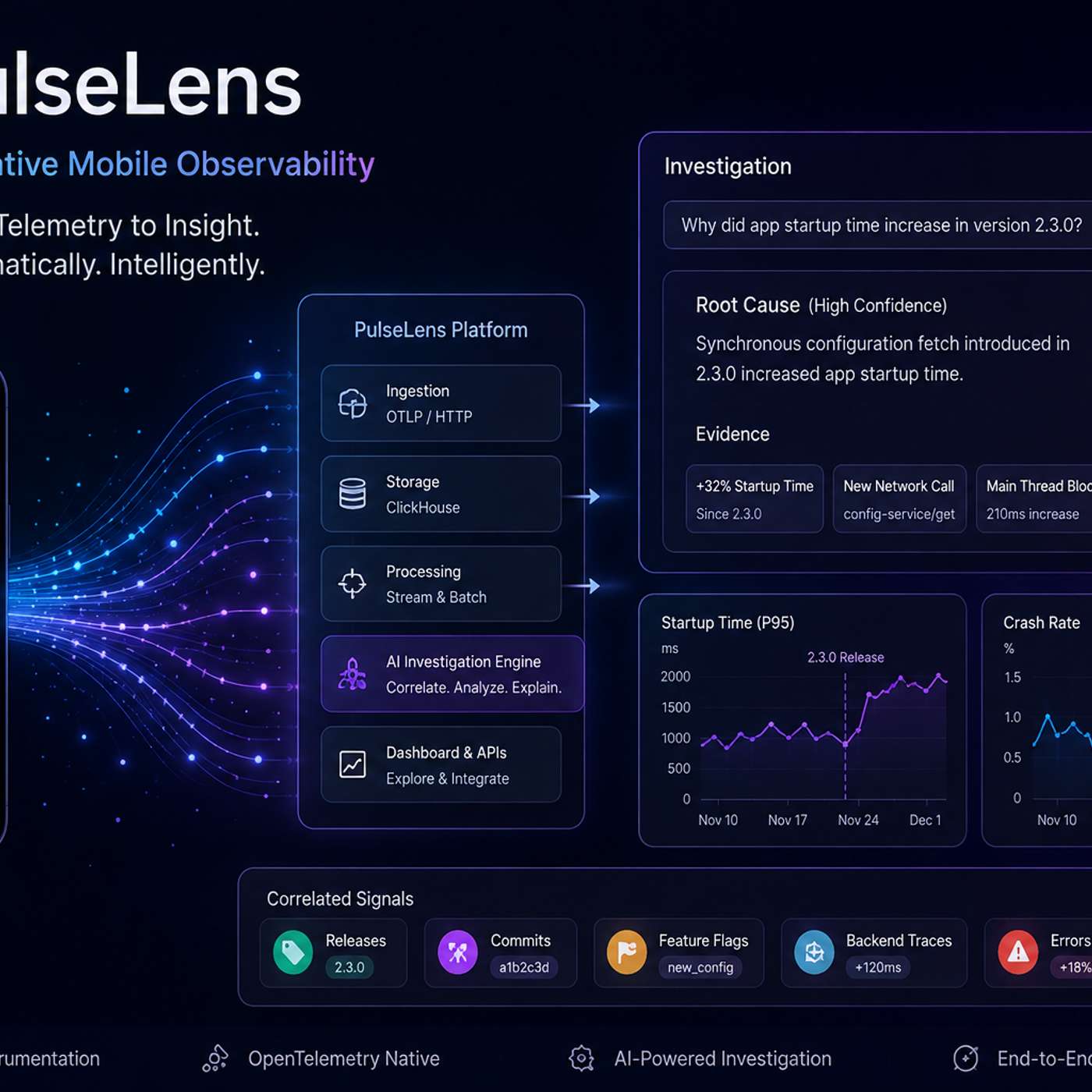
    PulseLens: An Open-Source AI Investigation Engine for Mobile Observability

    This story was originally published on HackerNoon at: https://hackernoon.com/pulselens-an-open-source-ai-investigation-engine-for-mobile-observability. PulseLens combines mobile observability, OpenTelemetry, and AI to investigate production regressions and generate evidence-backed root-cause insights. Check more stories related to programming at: https://hackernoon.com/c/programming. You can also check exclusive content about #observability, #open-telemetry, #mobile-development, #open-source, #artificial-intelligence, #open-source-projects, #side-project, #open-source-ai, and more. This story was written by: @uthejdeveloper. Learn more about this writer by checking @uthejdeveloper's about page, and for more stories, please visit hackernoon.com. PulseLens is an open-source, AI-native mobile observability project designed to move beyond dashboards and raw telemetry. With lightweight automatic instrumentation, it captures mobile performance signals and builds toward correlating them with releases, backend traces, feature flags, crashes, and code changes. The goal is an evidence-driven AI investigation engine capable of answering questions such as “Why did app startup become slower?” with ranked root-cause hypotheses rather than requiring engineers to manually investigate multiple systems.

  • September 2 · 47 min

    Linus Torvalds Has a Hallucination

    This story was originally published on HackerNoon at: https://hackernoon.com/linus-torvalds-has-a-hallucination. What if the 1991 Linus Torvalds woke up in 2026 and called the whole AI stack bad taste? And an open source approach to change that. Check more stories related to programming at: https://hackernoon.com/c/programming. You can also check exclusive content about #open-source, #open-source-software, #open-source-ai, #futurism, #linux, #ai-taste, #software-architecture, #hackernoon-top-story, and more. This story was written by: @zbruceli. Learn more about this writer by checking @zbruceli's about page, and for more stories, please visit hackernoon.com. What if the 1991 Linus Torvalds woke up in 2026 and called the whole AI stack bad taste? And an open source approach to change that.

  • September 1 · 21 min

    Matching Blood Donors by GPS: The Geospatial Query Design Behind GeoBlood

    This story was originally published on HackerNoon at: https://hackernoon.com/matching-blood-donors-by-gps-the-geospatial-query-design-behind-geoblood. How GeoBlood matches blood donors in real time: MongoDB 2dsphere indexes, $geoNear vs $geoWithin, staged radius expansion, and donor location privacy. Check more stories related to programming at: https://hackernoon.com/c/programming. You can also check exclusive content about #mongodb, #geospatial, #software-engineering, #backend-development, #database-indexing, #nodejs, #system-design, #tech-for-good, and more. This story was written by: @obaid03. Learn more about this writer by checking @obaid03's about page, and for more stories, please visit hackernoon.com. Blood donor matching looks like a proximity search and is not one. This is how the query works at GeoBlood, a nonprofit platform live in four countries: what a MongoDB 2dsphere index actually does with S2 cell coverings, when to reach for $near versus $geoWithin versus $geoNear, and the trap where putting your filter in a separate $match instead of inside $geoNear's query makes the stage materialise everything in the radius before discarding it. Then the domain part. ABO compatibility is a matrix, not an equality check, so widening the pool means every request starts recruiting O negative donors, and your ranking has to protect the scarcest type instead of spending it. Radius expansion runs in timed waves over annuli so nobody gets four pushes for one request. And donor locations are matched precisely but published coarsely, because random per-request jitter is defeated by averaging forty samples.

  • September 1 · 9 min

    Separating Workflow Orchestration from UI Reactions in Frontend Applications

    This story was originally published on HackerNoon at: https://hackernoon.com/separating-workflow-orchestration-from-ui-reactions-in-frontend-applications. Emit SUCCESS and NAME_REQUIRED, not SHOW_TOAST. The view-model owns the workflow; the screen owns the reaction. Check more stories related to programming at: https://hackernoon.com/c/programming. You can also check exclusive content about #frontend, #react, #mobx, #architecture, #typescript, #eventbus, #frontend-architecture, #state-management, and more. This story was written by: @paulmatvienko. Learn more about this writer by checking @paulmatvienko's about page, and for more stories, please visit hackernoon.com. Front-end architecture becomes harder to maintain when workflow logic and UI reactions are mixed together. States should represent things that exist over time, while events should represent things that happen. Local workflow events provide a boundary between the two: view-models own the workflow and report outcomes such as SUCCESS, ERROR, or NAME_REQUIRED, while the UI decides how to react with navigation, showing modals, or displaying notifications. This pattern is most useful for complex workflows with multiple branches or UI reactions; for simple local interactions, direct calls are usually easier to understand.

  • August 31 · 13 min

    We Don't Merge Red: Shifting E2E Tests Left in Mobile Development

    This story was originally published on HackerNoon at: https://hackernoon.com/we-dont-merge-red-shifting-e2e-tests-left-in-mobile-development. A practical look at moving mobile E2E tests into pull requests, using Detox, CI gates, impact analysis, and QA review to catch bugs earlier. Check more stories related to programming at: https://hackernoon.com/c/programming. You can also check exclusive content about #qa, #shift-left, #shift-left-testing, #e2e, #e2e-testing, #qa-automation, #detox-testing, #regression-testing, and more. This story was written by: @eilinwis. Learn more about this writer by checking @eilinwis's about page, and for more stories, please visit hackernoon.com. We made red e2e tests block merges. Tests now get fixed in the PR that broke them, not two weeks later during the release scramble. Getting there took impact analysis, parallelization, a stable main branch, and four months of convincing people. A PR run went from 60 minutes to 12, critical production bugs dropped by roughly half, and releases stopped being an event.

  • August 31 · 10 min

    Why Mouse Jigglers Defeat Activity-Based Time Tracking

    This story was originally published on HackerNoon at: https://hackernoon.com/why-mouse-jigglers-defeat-activity-based-time-tracking. Activity percentages on time-tracking dashboards are basically a compressed view of mouse and keyboard input. Check more stories related to programming at: https://hackernoon.com/c/programming. You can also check exclusive content about #time-tracking-software, #mouse-jigglers, #employee-monitoring, #remote-work-monitoring, #endpoint-telemetry, #windows-endpoint-data, #usb-hid-devices, #workplace-surveillance, and more. This story was written by: @octowatchdlp. Learn more about this writer by checking @octowatchdlp's about page, and for more stories, please visit hackernoon.com. The article argues that activity percentages mostly measure input motion, not real work. Mouse jigglers exploit that blind spot, while richer endpoint telemetry can help flag suspicious patterns. The key caveat: telemetry should inform review, not automatically prove misconduct.

  • August 30 · 8 min

    How to Use the File Upload Free Plan to Launch a Business: 10 Ideas

    This story was originally published on HackerNoon at: https://hackernoon.com/how-to-use-the-file-upload-free-plan-to-launch-a-business-10-ideas. Launch a business on Filestack's free plan. 10 concrete ideas with copyable requests, smart task-chaining order, and processing tips that save time. Check more stories related to programming at: https://hackernoon.com/c/programming. You can also check exclusive content about #filestack, #file-upload, #business-ideas, #file-upload-free-plan, #proof-delivery, #image-cleanup, #document-intake, #good-company, and more. This story was written by: @filestack. Learn more about this writer by checking @filestack's about page, and for more stories, please visit hackernoon.com. Choose an idea where you already know the buyer and the budget it replaces. Build the smallest sellable outcome before adding a broad feature set. Resize before visual effects and encode last to avoid processing pixels you will discard. Treat document privacy, fallback behavior, and physical operations as product requirements from the start. Use the free plan for the first version, then match higher-plan capabilities to proven customer demand.

Showing 21–40 of 91 episodes