Skip to content
Artwork for PBS Space Time
PBS Space Time · Saturday · 9 min

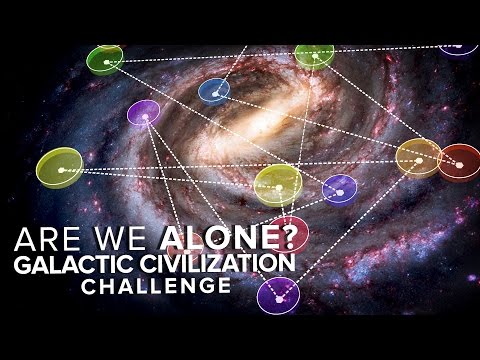
Are We Alone? Galactic Civilization Challenge

The Drake Equation tells us the likelihood that there are other advanced technological civilizations waiting for us among the stars. In this episode of Space Time we challenge you to use the Drake Equation to help us determine how near or far these alien races may be. Links to reference material below. Uploaded 05-10-16 Get your own Space Time t­shirt at http://bit.ly/1QlzoBi Tweet at us! @pbsspacetime Facebook: facebook.com/pbsspacetime Email us! pbsspacetime [at] gmail [dot] com Comment on Reddit: http://www.reddit.com/r/pbsspacetime Support us on Patreon! http://www.patreon.com/pbsspacetime Help translate our videos! http://www.youtube.com/timedtext_cs_panel?tab=2&c=UC7_gcs09iThXybpVgjHZ_7g Everything we’ve learned about our universe tells us that it is very unlikely we are alone. Frank Drake and his Drake Equation compute exactly how unlikely this is. The answer may surprise you. Written and hosted by Matt O’Dowd Produced by Rusty Ward Made by Kornhaber Brown (www.kornhaberbrown.com) A New Empirical Constraint on the Prevalence of Technological Species in the Universe Adam Frank and W.T. Sullivan III https://arxiv.org/abs/1510.08837 The Drake Equation http://www.seti.org/drakeequation G-type stars within 100 light years http://www.solstation.com/stars3/100-gs.htm Prevalence of Earth-size planets orbiting Sun-like stars Erik A. Petigura, Andrew W. Howard, Geoffrey W. Marcy https://arxiv.org/abs/1311.6806 The Kepler Sample http://kepler.nasa.gov/science/about/targetFieldOfView/ Planet Hunters X. KIC 8462852 - Where's the Flux? Tabby. S. Boyajian, et al. https://arxiv.org/abs/1509.03622 Learn more about your ad choices. Visit megaphone.fm/adchoices Learn more about your ad choices. Visit megaphone.fm/adchoices

0:00-9:06

transcript

No transcript — this publisher did not publish one.

show notes

The Drake Equation tells us the likelihood that there are other advanced technological civilizations waiting for us among the stars. In this episode of Space Time we challenge you to use the Drake Equation to help us determine how near or far these alien races may be. Links to reference material below.

Uploaded 05-10-16

Get your own Space Time t­shirt at http://bit.ly/1QlzoBi
Tweet at us! @pbsspacetime
Facebook: facebook.com/pbsspacetime
Email us! pbsspacetime [at] gmail [dot] com
Comment on Reddit: http://www.reddit.com/r/pbsspacetime
Support us on Patreon! http://www.patreon.com/pbsspacetime

Help translate our videos! http://www.youtube.com/timedtext_cs_panel?tab=2&c=UC7_gcs09iThXybpVgjHZ_7g

Everything we’ve learned about our universe tells us that it is very unlikely we are alone. Frank Drake and his Drake Equation compute exactly how unlikely this is. The answer may surprise you.

Written and hosted by Matt O’Dowd
Produced by Rusty Ward
Made by Kornhaber Brown (www.kornhaberbrown.com)

A New Empirical Constraint on the Prevalence of Technological Species in the Universe
Adam Frank and W.T. Sullivan III
https://arxiv.org/abs/1510.08837

The Drake Equation
http://www.seti.org/drakeequation

G-type stars within 100 light years
http://www.solstation.com/stars3/100-gs.htm

Prevalence of Earth-size planets orbiting Sun-like stars
Erik A. Petigura, Andrew W. Howard, Geoffrey W. Marcy
https://arxiv.org/abs/1311.6806

The Kepler Sample
http://kepler.nasa.gov/science/about/targetFieldOfView/

Planet Hunters X. KIC 8462852 - Where's the Flux?
Tabby. S. Boyajian, et al.
https://arxiv.org/abs/1509.03622

Learn more about your ad choices. Visit megaphone.fm/adchoices

Learn more about your ad choices. Visit megaphone.fm/adchoices
links11