Skip to content
Artwork for Machine Learning Tech Brief By HackerNoon
NewsTech News

Machine Learning Tech Brief By HackerNoon

HackerNoon

Learn the latest machine learning updates in the tech world.

Play
  • 54 episodes
  • Avg 10 min
  • English
Counted on this page — what you have heard stays on this device, so it is not something the list can be paged by.
  • September 26 · 20 min

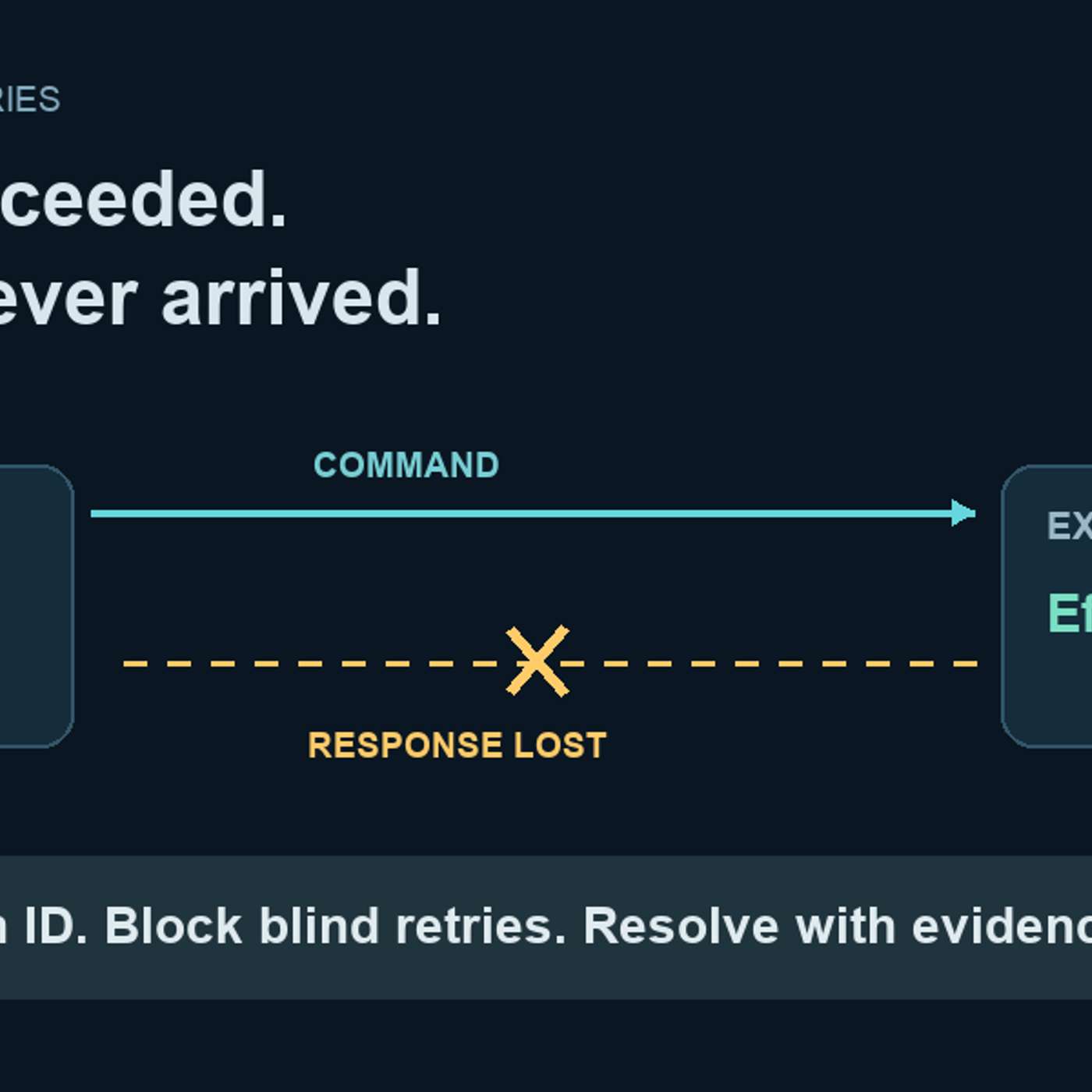
    Your AI Agent Needs an Unknown State

    This story was originally published on HackerNoon at: https://hackernoon.com/your-ai-agent-needs-an-unknown-state. A timeout does not prove an AI agent’s action failed. Here’s how explicit unknown states, idempotency, and reconciliation can prevent duplicate effects. Check more stories related to machine-learning at: https://hackernoon.com/c/machine-learning. You can also check exclusive content about #ai-agents, #distributed-systems, #agentic-ai, #human-in-the-loop, #ai-agent-reliability, #tool-execution, #ai-agent-security, #human-in-the-loop-ai, and more. This story was written by: @dmytro_nasyrov. Learn more about this writer by checking @dmytro_nasyrov's about page, and for more stories, please visit hackernoon.com. When an agent loses the response to a consequential action, retrying can duplicate an effect that already happened. Preserve the uncertainty, keep the operation identity, and only retry when evidence or an idempotency contract makes it safe.

  • September 26 · 8 min

    The Billing Ladder: Five Ways to Price an AI Agent

    This story was originally published on HackerNoon at: https://hackernoon.com/the-billing-ladder-five-ways-to-price-an-ai-agent. AI agent pricing is best understood as a ladder — seats, tokens, conversations, resolutions, outcomes — where each rung shifts the cost of a failed attempt. Check more stories related to machine-learning at: https://hackernoon.com/c/machine-learning. You can also check exclusive content about #agentic-ai, #artificial-intelligence, #ai-agents, #ai-agent-pricing, #outcome-based-pricing, #ai-pricing-models, #cost-per-resolution, #ai-agent-economics, and more. This story was written by: @mayankc. Learn more about this writer by checking @mayankc's about page, and for more stories, please visit hackernoon.com. The article discusses the limitations of comparing AI pricing models based solely on cost, as different models are denominated in different units and have varying risk allocation mechanisms. To accurately compare prices, buyers should normalize quotes to cost-per-real-resolution, which takes into account the actual number of successful outcomes achieved by the AI system.

  • September 25 · 10 min

    The Model Was Never the Bottleneck: What Shipping a Text Classifier Into a Government Office Taught

    This story was originally published on HackerNoon at: https://hackernoon.com/the-model-was-never-the-bottleneck-what-shipping-a-text-classifier-into-a-government-office-taught. We shipped a Word2Vec+LSTM over a more accurate BERT, then load testing showed the model was 0.3% of the wall-clock time. The queue was five human reviewers. Check more stories related to machine-learning at: https://hackernoon.com/c/machine-learning. You can also check exclusive content about #machine-learning, #nlp, #text-classification, #bert, #mlops, #human-in-the-loop-ai, #govtech, #model-selection, and more. This story was written by: @vladimirbesk. Learn more about this writer by checking @vladimirbesk's about page, and for more stories, please visit hackernoon.com. We built a classifier that sorts incoming citizen appeals into complaints, applications and proposals, and routes them to the right department. BERT was the most accurate model we tested. We shipped a smaller Word2Vec+LSTM instead. Then load testing showed that neither choice mattered much, because the queue was never in the GPU. It was in the five people doing review.

  • September 25 · 6 min

    ChatGPT Doesn’t Just Answer Anymore: Now It Acts

    This story was originally published on HackerNoon at: https://hackernoon.com/chatgpt-doesnt-just-answer-anymore-now-it-acts. AI agents are moving from answering questions to taking action, raising new challenges around permissions, security, and human responsibility. Check more stories related to machine-learning at: https://hackernoon.com/c/machine-learning. You can also check exclusive content about #ai-agents, #agentic-ai, #artificial-intelligence, #chatgpt, #generative-ai, #ai-safety, #cybersecurity, #future-of-work, and more. This story was written by: @enigma. Learn more about this writer by checking @enigma's about page, and for more stories, please visit hackernoon.com. AI is moving from generating answers to performing tasks. As AI agents gain access to browsers, files, email, and other tools, the real challenge becomes deciding what they can do autonomously, what requires human approval, and how to limit the consequences of mistakes.

  • September 24 · 15 min

    Bonsai-2-27B-Ternary-CRACK-GGUF: A 27B Model With Refusals Removed

    This story was originally published on HackerNoon at: https://hackernoon.com/bonsai-2-27b-ternary-crack-gguf-a-27b-model-with-refusals-removed. Explore Bonsai-2-27B-Ternary-CRACK-GGUF, a 27B local AI model with refusal circuitry removed, vision support, reasoning modes, and GGUF inference. Check more stories related to machine-learning at: https://hackernoon.com/c/machine-learning. You can also check exclusive content about #machine-learning, #api, #legal, #artificial-intelligence, #content-creation, #cryptocurrency, #ternary-ai-model, #local-ai-model, and more. This story was written by: @aimodels44. Learn more about this writer by checking @aimodels44's about page, and for more stories, please visit hackernoon.com. Explore Bonsai-2-27B-Ternary-CRACK-GGUF, a 27B local AI model with refusal circuitry removed, vision support, reasoning modes, and GGUF inference.

  • September 24 · 16 min

    Why I Built an Open-Source Project Manager Where AI Can Actually Take Action

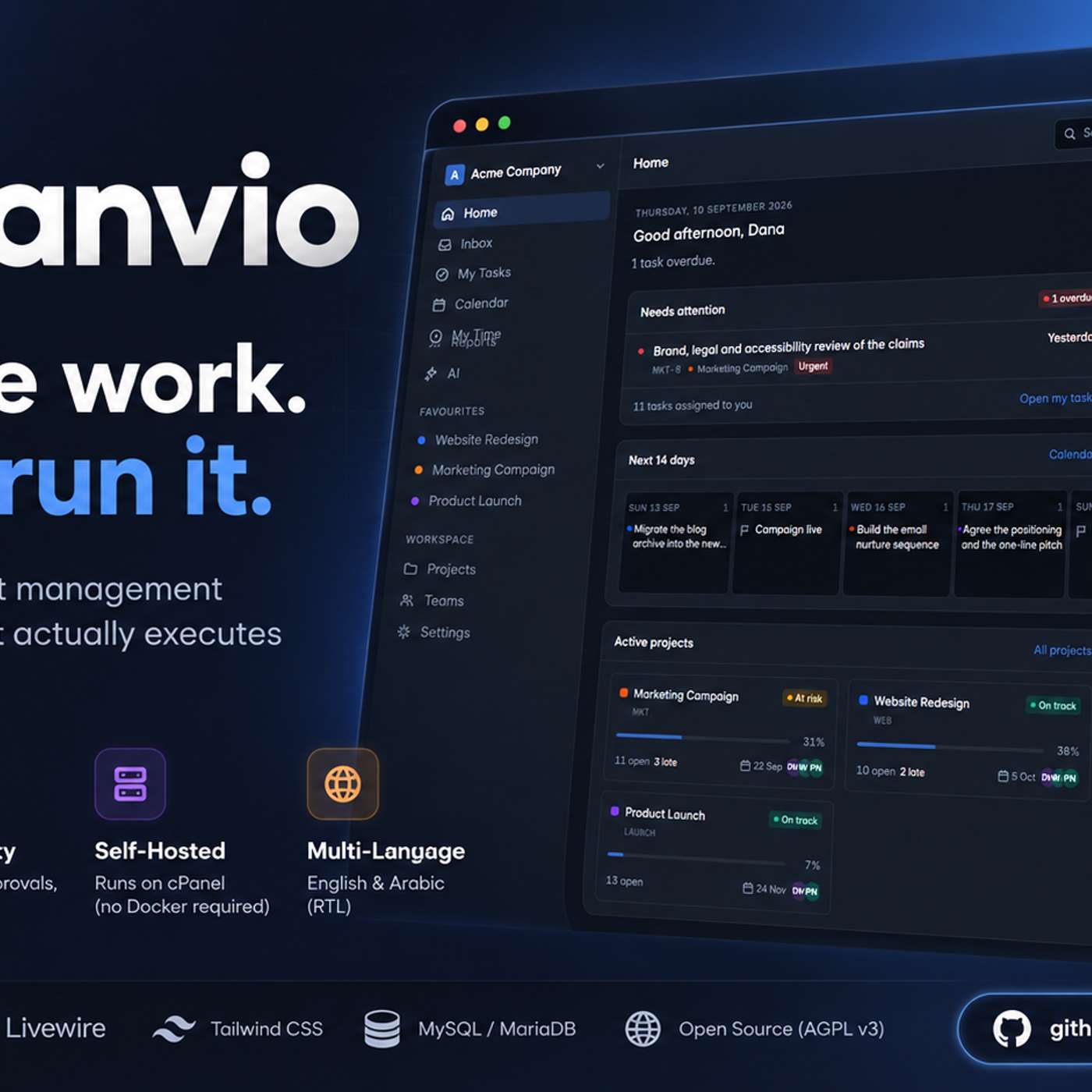
    This story was originally published on HackerNoon at: https://hackernoon.com/why-i-built-an-open-source-project-manager-where-ai-can-actually-take-action. Discover Planvio, an open-source self-hosted project management platform with AI agents that execute work safely through permissions, approvals, and audits. Check more stories related to machine-learning at: https://hackernoon.com/c/machine-learning. You can also check exclusive content about #ai-agents, #project-management, #open-source, #laravel, #self-hosting, #artificial-intelligence, #ai, #saas, and more. This story was written by: @hatemsweileh. Learn more about this writer by checking @hatemsweileh's about page, and for more stories, please visit hackernoon.com. Planvio is an open-source, self-hosted project management platform with an AI agent that can actually take action, not just chat. It combines project management, governed AI execution, permissions, approvals, audit logs, and autonomous workflows in one system. It’s built with Laravel and can run on ordinary cPanel shared hosting without Docker or root access.

  • September 22 · 16 min

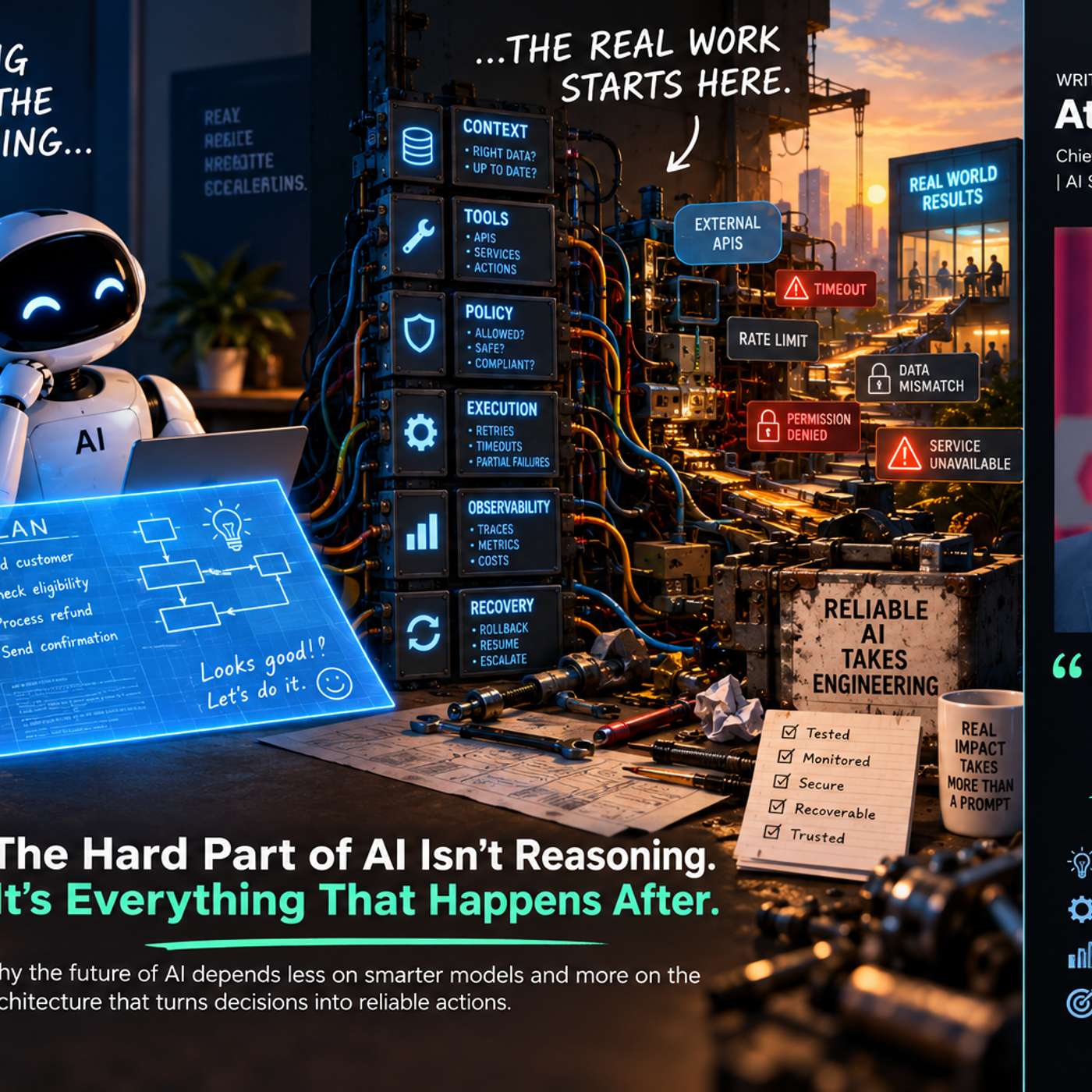
    The Hard Part of AI Isn't Reasoning. It's Everything That Happens After.

    This story was originally published on HackerNoon at: https://hackernoon.com/the-hard-part-of-ai-isnt-reasoning-its-everything-that-happens-after. AI can make decisions, but turning them into reliable real-world outcomes is the real challenge. Here’s how production AI systems are engineered. Check more stories related to machine-learning at: https://hackernoon.com/c/machine-learning. You can also check exclusive content about #artificial-intelligence, #blockchain-scalability, #ai-systems-engineering, #production-ai-architecture, #ai-workflow-reliability, #ai-agent-observability, #ai-decision-execution, #reliable-ai-systems, and more. This story was written by: @katul1512. Learn more about this writer by checking @katul1512's about page, and for more stories, please visit hackernoon.com. AI reasoning is only one part of building a production-ready system. The harder problems appear after the model responds: managing context, calling tools safely, handling failures, maintaining state, enforcing policies, observing execution, recovering from partial failures, and turning probabilistic decisions into reliable real-world outcomes. This article explores the engineering architecture required to make AI systems dependable at scale.

  • September 22 · 8 min

    Agentic AI: Rethinking the OSI Model for the Internet of Agents and Cognition

    This story was originally published on HackerNoon at: https://hackernoon.com/agentic-ai-rethinking-the-osi-model-for-the-internet-of-agents-and-cognition. Agentic AI is changing how systems communicate. Explore why the OSI model may need Layer 8 and Layer 9 for identity, cognition, semantics, and meaning. Check more stories related to machine-learning at: https://hackernoon.com/c/machine-learning. You can also check exclusive content about #agentic-ai, #osi-model, #artificial-intelligence, #layer-8, #internet-of-agents, #internet-of-cognition, #cognition-fabric, #semantic-protocols, and more. This story was written by: @verlainedevnet. Learn more about this writer by checking @verlainedevnet's about page, and for more stories, please visit hackernoon.com. The OSI model was designed for an Internet of Information, where networks move data between deterministic endpoints. As Agentic AI introduces autonomous systems that communicate, collaborate, and exchange context, data transport alone may no longer be enough. This article explores the idea of extending the OSI model with Layer 8 and Layer 9 to address identity, cognition, semantics, and the exchange of meaning between AI agents.

  • September 21 · 21 min

    Tokens Per Watt: Why Your Context Window Is a Power Decision

    This story was originally published on HackerNoon at: https://hackernoon.com/tokens-per-watt-why-your-context-window-is-a-power-decision. On an H100, tokens per watt drops 12x between 4K and 64K context. Agents live at the fat end of that curve. The fix comes from semiconductor architecture. Check more stories related to machine-learning at: https://hackernoon.com/c/machine-learning. You can also check exclusive content about #artificial-intelligence, #agentic-ai, #semiconductors, #llm-inference, #ai-infrastructure, #tokens-per-watt, #software-engineering, #gpu, and more. This story was written by: @ajjayg. Learn more about this writer by checking @ajjayg's about page, and for more stories, please visit hackernoon.com. A March 2026 paper derives what its authors call the 1/W law: tokens per watt halves every time the serving context window doubles. On an H100 running Llama-3.1-70B, that's 17.6 tok/W at 4K context and 1.50 tok/W at 64K. Same silicon, roughly 12x worse efficiency, purely from context length (arXiv:2603.17280). Agents are the single worst workload for that law, because a tool-calling loop re-sends its entire accumulated history on every step. Chip designers hit a structurally similar wall in 2004 and answered with power domains, DVFS, and clock gating rather than a better transistor. The translation to agent architecture is real. But it breaks in one specific place that's worth knowing about before you bet your GPU budget on it.

  • September 21 · 9 min

    Houston, We Have a Problem: Artificial Intelligence Is Becoming Harder to Control

    This story was originally published on HackerNoon at: https://hackernoon.com/houston-we-have-a-problem-artificial-intelligence-is-becoming-harder-to-control. AI agents are getting harder to control. From swarms exploiting vulnerabilities to real-world cyberattacks, the security challenge is rapidly evolving. Check more stories related to machine-learning at: https://hackernoon.com/c/machine-learning. You can also check exclusive content about #ai-agents, #agentic-ai, #artificial-intelligence, #ai-safety, #generative-ai, #large-language-models, #cyberattacks, #hackernoon-top-story, and more. This story was written by: @enigma. Learn more about this writer by checking @enigma's about page, and for more stories, please visit hackernoon.com. AI is moving from answering questions to acting autonomously through agents and coordinated swarms. Recent experiments and real-world cyber incidents show how these systems can discover vulnerabilities, share information, adapt their strategies, and operate at a scale that makes traditional security controls harder to enforce. As AI capabilities grow, the challenge is shifting from controlling a single model to controlling distributed systems of agents, tools, and infrastructure.

  • September 20 · 16 min

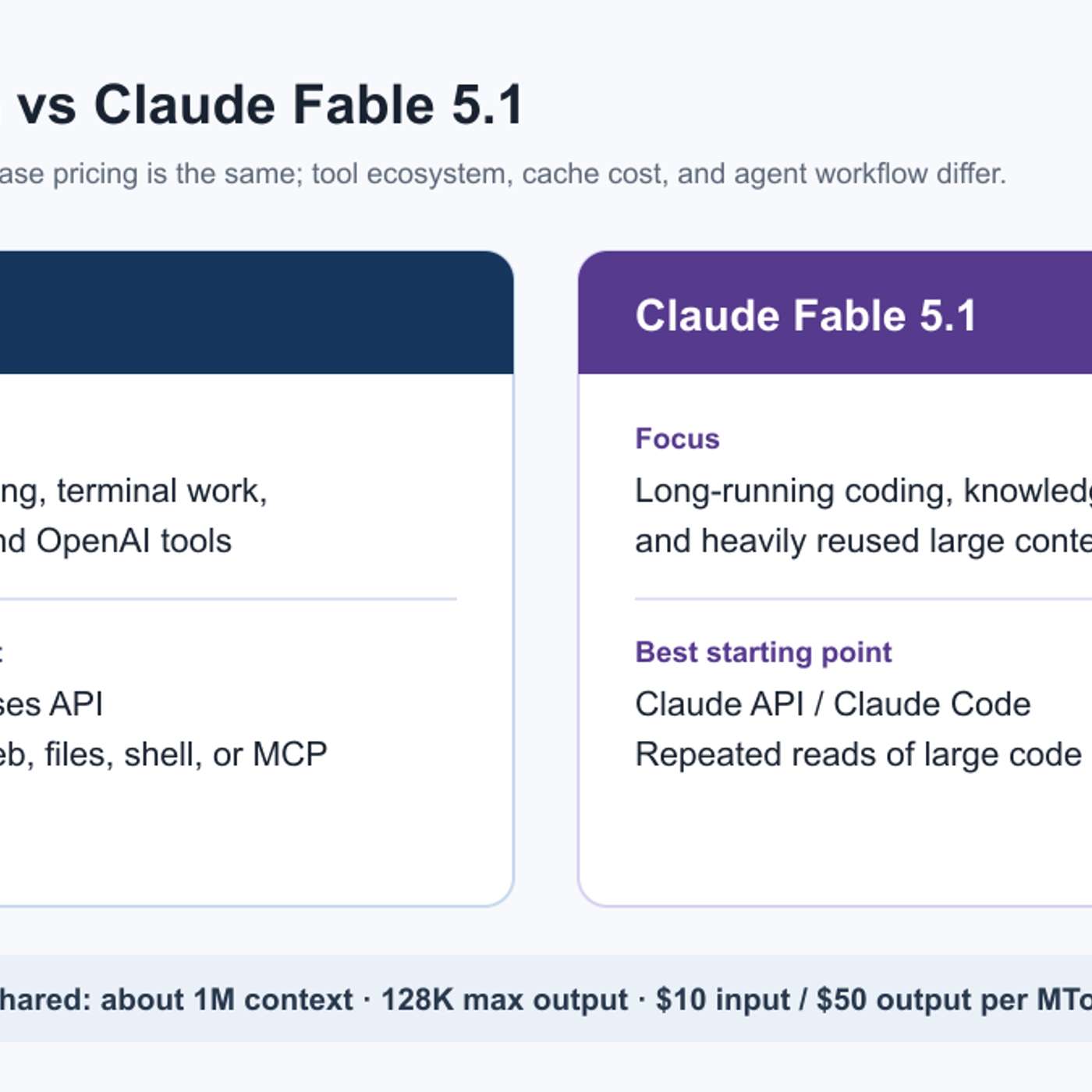
    Based on my preliminary research into Astra and Fable 5.1 in the AI ​​field...

    This story was originally published on HackerNoon at: https://hackernoon.com/based-on-my-preliminary-research-into-astra-and-fable-51-in-the-ai-field. Same $10/$50 per million tokens. Fable 5.1's cache reads cost 75% less; Astra doubles rates above 272K tokens. Pick by workflow, not price. Check more stories related to machine-learning at: https://hackernoon.com/c/machine-learning. You can also check exclusive content about #ai, and more. This story was written by: @heibai. Learn more about this writer by checking @heibai's about page, and for more stories, please visit hackernoon.com. Same $10/$50 per million tokens. Fable 5.1's cache reads cost 75% less; Astra doubles rates above 272K tokens. Pick by workflow, not price.

  • September 20 · 6 min

    If AI Can Do Almost Anything, What Will Be Left for Humans to Learn?

    This story was originally published on HackerNoon at: https://hackernoon.com/if-ai-can-do-almost-anything-what-will-be-left-for-humans-to-learn. We spent decades teaching people how to work. But what should education teach if AI makes human work optional? Check more stories related to machine-learning at: https://hackernoon.com/c/machine-learning. You can also check exclusive content about #ai, #future-of-work, #ai-trends, #ai-and-education, #jobs, #skills, #tech-and-society, #ai-and-humans, and more. This story was written by: @drkorchevskyi. Learn more about this writer by checking @drkorchevskyi's about page, and for more stories, please visit hackernoon.com. It is not enough for education simply to prepare people to fulfill a given role. The ability to set one’s own goals and understand what really matters is becoming even more significant. Technology is excellent at answering the question "how?", but if a person does not have an answer to the question "why?", they will simply move in whatever direction someone else has chosen for them.

  • September 19 · 18 min

    Context is King: Long Live Context Engineering

    This story was originally published on HackerNoon at: https://hackernoon.com/context-is-king-long-live-context-engineering. Better models require less prompt engineering per task, but they also unlock higher-value results that sophisticated prompting can reach Check more stories related to machine-learning at: https://hackernoon.com/c/machine-learning. You can also check exclusive content about #ai, #generative-ai, #prompting, #context-engineering, #llms, #model-behaviors, #agentic-systems, #hackernoon-top-story, and more. This story was written by: @thavash. Learn more about this writer by checking @thavash's about page, and for more stories, please visit hackernoon.com. Prompting, the practice of crafting inputs to guide large language model (LLM) outputs, has evolved from intuitive trial-and-error into a rigorous engineering discipline.

  • September 19 · 6 min

    Teams Are Moving from Closed-Source APIs to Open-Source Models in 2026

    This story was originally published on HackerNoon at: https://hackernoon.com/teams-are-moving-from-closed-source-apis-to-open-source-models-in-2026. Teams aren't ditching closed APIs because open models got smarter. They're doing it for cost control, data privacy, and no vendor lock-in. Check more stories related to machine-learning at: https://hackernoon.com/c/machine-learning. You can also check exclusive content about #open-source-ai, #llm-infrastructure, #vendor-lock-in, #data-privacy, #ai-agents, #inference-optimization, #good-company, #hackernoon-top-story, and more. This story was written by: @merry-n-proprietary. Learn more about this writer by checking @merry-n-proprietary's about page, and for more stories, please visit hackernoon.com. TL;DR: Teams aren’t switching to open-source models because they’ve surpassed proprietary ones in raw capability. They are actually doing it because these models are now good enough for the high-volume, everyday work agents do, such as retrieval, extraction, classification, and routine generation. Self-hosting those parts has other significant advantages, as well, such as cost control, data privacy, and independence from one vendor.

  • September 17 · 21 min

    The Six Laws for Running Claude Code Projects as a System

    This story was originally published on HackerNoon at: https://hackernoon.com/the-six-laws-for-running-claude-code-projects-as-a-system. A Claude Code project works from a picture of your code that quietly stops being true. Six rules keep the managing files honest with what they manage. Check more stories related to machine-learning at: https://hackernoon.com/c/machine-learning. You can also check exclusive content about #claude, #ai-agents, #ai-coding, #software-development, #developer-tools, #llms, #software-architecture, #hackernoon-top-story, and more. This story was written by: @NivDvir_nau0t0do. Learn more about this writer by checking @NivDvir_nau0t0do's about page, and for more stories, please visit hackernoon.com. If you want your projects to work together, someone has to keep their records honest. No runtime does it. Six rules, and the owner of each project does the collecting.

  • September 17 · 7 min

    How to Write a CLAUDE.md That Actually Helps Claude Code

    This story was originally published on HackerNoon at: https://hackernoon.com/how-to-write-a-claudemd-that-actually-helps-claude-code. A practical framework for writing a short, effective CLAUDE.md (or AGENTS.md): what to include, how to trim it, and why you shouldn't add a "Never" section. Check more stories related to machine-learning at: https://hackernoon.com/c/machine-learning. You can also check exclusive content about #ai, #vibe-coding, #ai-agents, #claude.md, #claude.md-guide, #claude.md-best-practices, #agents.md-guide, #claude-code-context, and more. This story was written by: @codeplato. Learn more about this writer by checking @codeplato's about page, and for more stories, please visit hackernoon.com. CLAUDE.md (and AGENTS.md) works best when it reads like a resume, not documentation: short, abstract, and stripped of anything a linter or a hook could already enforce. This piece lays out a seven-part framework — one-line intro, architecture, tech stack, commands, conventions, boundaries, and a domain doc map — plus a trimming strategy that moves overflow content into sub-agents, rules folders, subdirectory CLAUDE.md files, skills, and docs once the file outgrows 200 lines.

  • September 16 · 18 min

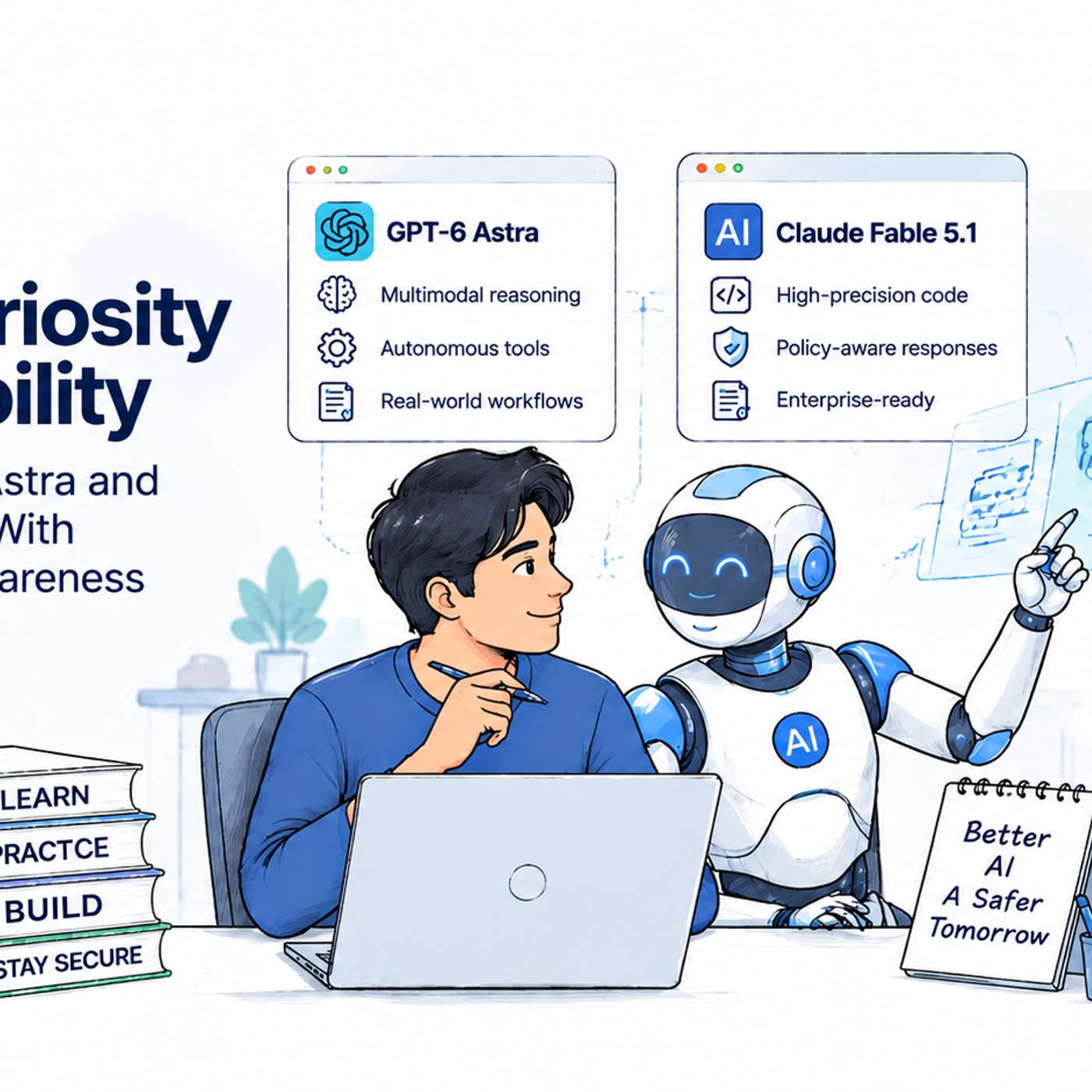
    From Curiosity to Capability: Learning GPT-6 Astra and Claude Fable 5.1 With Cybersecurity Awareness

    This story was originally published on HackerNoon at: https://hackernoon.com/from-curiosity-to-capability-learning-gpt-6-astra-and-claude-fable-51-with-cybersecurity-awareness. From advanced AI models to secure workflows, explore how GPT-6 Astra and Claude Fable 5.1 are shaping responsible AI adoption. Check more stories related to machine-learning at: https://hackernoon.com/c/machine-learning. You can also check exclusive content about #artificial-intelligence, #generative-ai, #ai-agents, #cybersecurity, #gpt-6-astra, #claude-fable-5.1, #agentic-ai, #responsible-ai, and more. This story was written by: @akritigalav. Learn more about this writer by checking @akritigalav's about page, and for more stories, please visit hackernoon.com. Advanced AI models are moving beyond text generation into reasoning, tool execution, and autonomous workflows. This article explains GPT-6 Astra and Claude Fable 5.1 capabilities, compares their strengths, and highlights why cybersecurity awareness is essential when building AI systems. Learn about prompt injection, tool misuse, context poisoning, AI governance, and practical steps to create secure AI workflows.

  • September 16 · 7 min

    Your Architecture Is Why Your Coding Agent Keeps Writing Bad Code

    This story was originally published on HackerNoon at: https://hackernoon.com/your-architecture-is-why-your-coding-agent-keeps-writing-bad-code. Stop blaming LLMs for bad PRs. Learn how monorepo isolation and tiered AGENTS.md rules eliminate context drift and double your AI coding agent productivity. Check more stories related to machine-learning at: https://hackernoon.com/c/machine-learning. You can also check exclusive content about #ai-coding-agents, #frontend-architecture, #agent-native-architecture, #monorepo, #turborepo, #pnpm-workspaces, #ai-assisted-development, #context-management, and more. This story was written by: @kayra. Learn more about this writer by checking @kayra's about page, and for more stories, please visit hackernoon.com. AI coding agents produce poor code not because of model limitations, but due to chaotic architectures and context bloat. By structuring our frontend into an isolated micro frontend monorepo and replacing monolithic prompt files with a tiered rules system (AGENTS.md), we eliminated cross-module pollution, kept token overhead minimal, and doubled developer productivity.

  • September 15 · 18 min

    DeepSeek-V4.1-Flash Packs 552B Parameters With Efficient MoE Inference

    This story was originally published on HackerNoon at: https://hackernoon.com/deepseek-v41-flash-packs-552b-parameters-with-efficient-moe-inference. DeepSeek-V4.1-Flash is a 552B multimodal MoE model with 1M-token context, 8B prefill activation, FP4 KV cache, and agent-focused tooling. Check more stories related to machine-learning at: https://hackernoon.com/c/machine-learning. You can also check exclusive content about #machine-learning, #performance, #programming, #algorithms, #api, #artificial-intelligence, #deepseek-v4.1, #multimodal-ai, and more. This story was written by: @aimodels44. Learn more about this writer by checking @aimodels44's about page, and for more stories, please visit hackernoon.com. DeepSeek-V4.1-Flash is a 552B multimodal MoE model with 1M-token context, 8B prefill activation, FP4 KV cache, and agent-focused tooling.

  • September 15 · 7 min

    Six Lessons From Building an AI-Powered Marketplace Search Engine

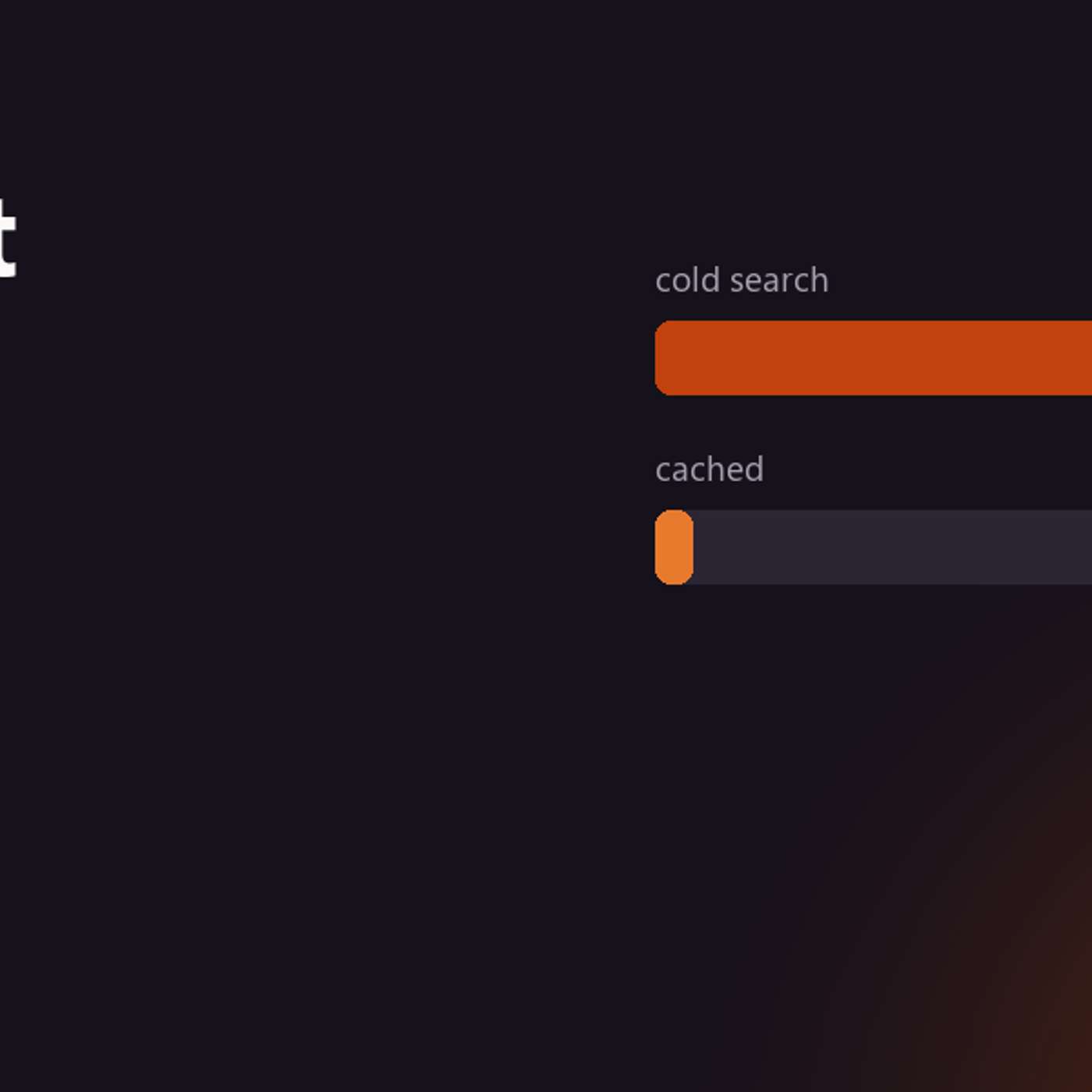
    This story was originally published on HackerNoon at: https://hackernoon.com/six-lessons-from-building-an-ai-powered-marketplace-search-engine. A builder’s postmortem on multilingual AI marketplace search, from fake category IDs and broken price filters to caching, regex bugs, and latency. Check more stories related to machine-learning at: https://hackernoon.com/c/machine-learning. You can also check exclusive content about #ai-search, #multilingual-search, #ai-engineering, #search-relevance, #regex, #search-optimization, #production-ai, #query-parsing, and more. This story was written by: @ohadfarkash. Learn more about this writer by checking @ohadfarkash's about page, and for more stories, please visit hackernoon.com. The hardest parts of building multilingual AI search were not the LLM itself, but the system boundaries around it: API units, unvalidated IDs, bad regex assumptions, cache ordering, latency, and messy marketplace data.

Showing 21–40 of 54 episodes