The State of Computer Use Agents | Anthropic, Browser Use & KERNEL
transcript
show notes
Bot traffic on the internet just passed human traffic, two years ahead of forecast. Most of it is agents clicking through websites built for people.
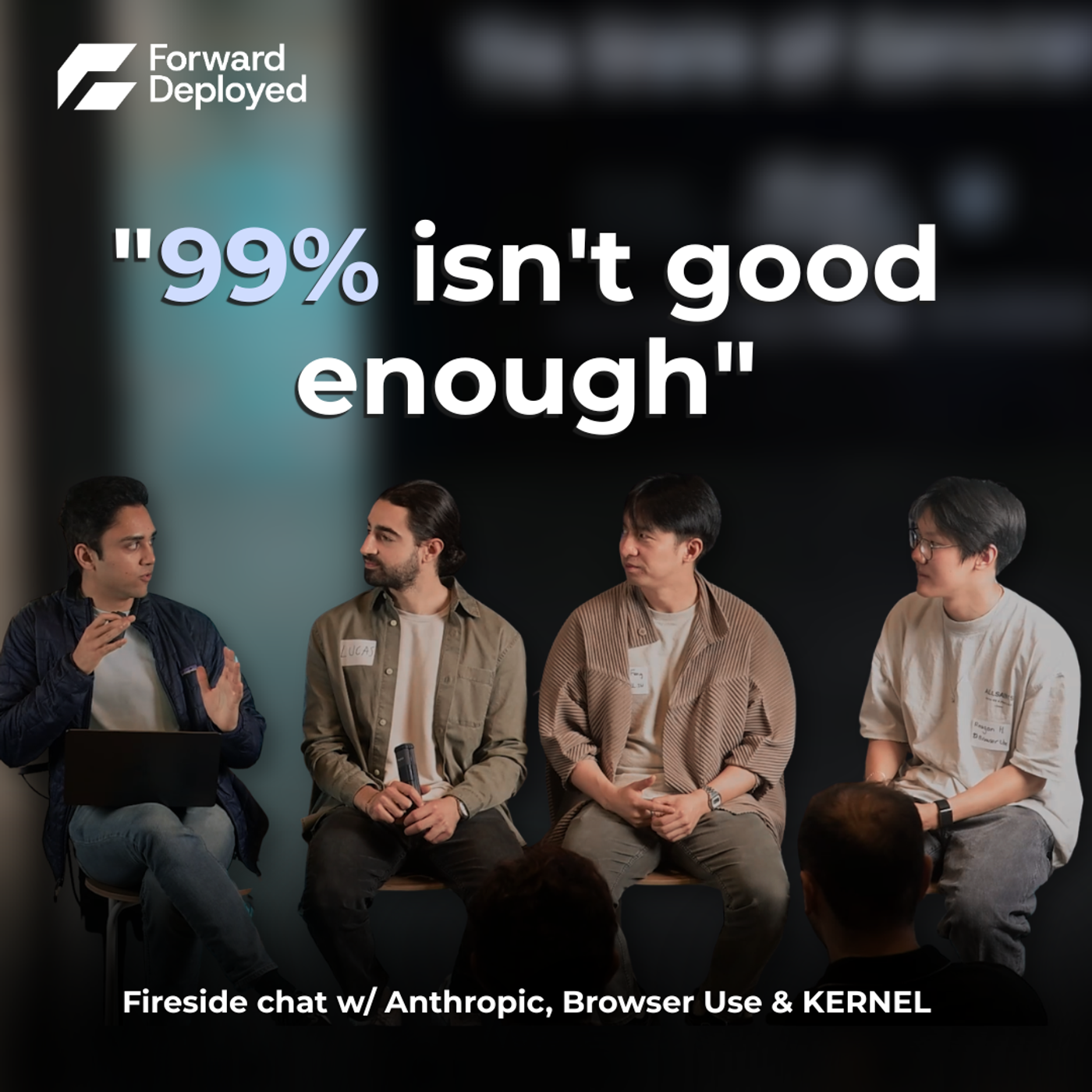
So I got three of the people building those agents in a room: Lucas Gonzalez Pagliere, who works on computer use at Anthropic, the team that shipped the first computer use model back in 2024. Reagan Hsu, founding engineer at Browser Use, whose open source library is sitting at around 100K GitHub stars. And Eric Feng, founding customer engineer at KERNEL, which runs the browser infrastructure underneath a lot of this - he was also first GTM at Sentry.
We covered where the models genuinely are today vs where the benchmarks say they are, what it costs to run an agent long enough to finish real work, and the arms race between agents and the anti-bot systems trying to keep them out. Then the harder question underneath all of it: whether the web reorganizes itself around agents, or hardens against them. They disagreed on plenty of it.
If you want to know what agents can actually pull off on a real website today - and what still stops them cold - this one's worth your time!
Chapters
00:00 Welcome and Guests
00:49 Companies and Stacks
01:14 Everyday Agent Use Cases
03:38 Defining Computer Use Agents
05:15 How Computer Use Works
08:41 Screenshots vs DOM Hybrid
11:03 Benchmarks and OSWorld
13:51 OSWorld 2 Difficulty Jump
15:43 Training Models and Cost
18:57 Speed Infrastructure and Stealth
21:55 Anti Bot and KYC Future
27:24 Reverse Engineering vs UI Automation
29:43 Computer Use vs Browser Use
31:05 Scaling Laws and Harnesses
32:49 Playwright Selenium Still Matter
33:17 Playwright Still Dominates
33:27 Why Run 1000 Agents
34:39 Long Running Agent Challenges
35:45 Memory and Compaction
38:10 State Changes Mid Task
39:36 OS and Browser Fingerprints
40:42 DOM Efficiency and WebMCP
41:36 Recsys and Agent Personas
43:57 Agent Friendly Websites
45:41 Human Speed vs Agent Power
48:32 Context Window Tradeoffs
50:34 Harnesses for Temporal State
51:59 Speed Optimizations and Tabs
54:23 Human Collaboration Limits
58:09 Raw Capability vs Better APIs
01:00:47 Training Methods and Bottlenecks
01:01:41 End State Interfaces
01:05:09 Next 12 Months Predictions
01:06:17 Closing Thanks