Skip to content
Artwork for David's Gemini Notebook Podcast Collection
David's Gemini Notebook Podcast Collection · August 15 · 21 min

When Doctors Stop Memorizing - Short

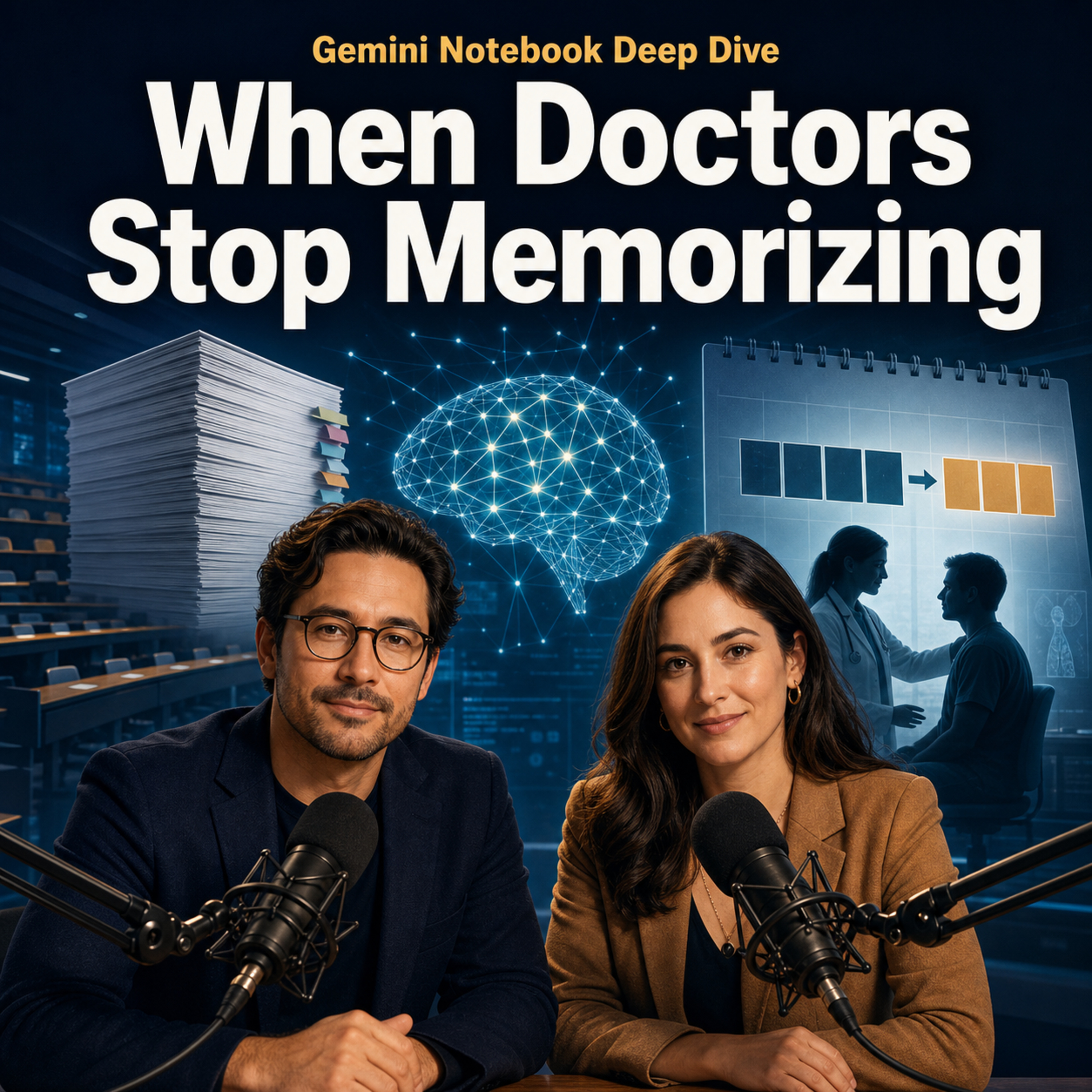
A 742-page intensive-care chart becomes the starting point for a radical question: if artificial intelligence can synthesize medical knowledge faster than any human, why are future doctors still trained as walking libraries? Drawing on Dr. Mark Triola’s journey from Bellevue Hospital to medical-education innovation at NYU, this episode explores how information overload is forcing medicine to reconsider what a doctor truly needs to know. The story moves from the century-old Flexner model to AI-guided precision education, personalized “morning nudges,” and three-year medical degrees that could reduce debt and place physicians into practice sooner. But faster training brings serious risks—from automation bias and compromised privacy to algorithms that preserve historical prejudice. Can medicine use AI to create more thoughtful, present, and human doctors—or will physicians become people who merely approve a machine’s decisions?

0:00-21:31

transcript

No transcript — this publisher did not publish one.

show notes

A 742-page intensive-care chart becomes the starting point for a radical question: if artificial intelligence can synthesize medical knowledge faster than any human, why are future doctors still trained as walking libraries? Drawing on Dr. Mark Triola’s journey from Bellevue Hospital to medical-education innovation at NYU, this episode explores how information overload is forcing medicine to reconsider what a doctor truly needs to know.

The story moves from the century-old Flexner model to AI-guided precision education, personalized “morning nudges,” and three-year medical degrees that could reduce debt and place physicians into practice sooner. But faster training brings serious risks—from automation bias and compromised privacy to algorithms that preserve historical prejudice. Can medicine use AI to create more thoughtful, present, and human doctors—or will physicians become people who merely approve a machine’s decisions?