CyberSecurity Summary · Today · 22 min
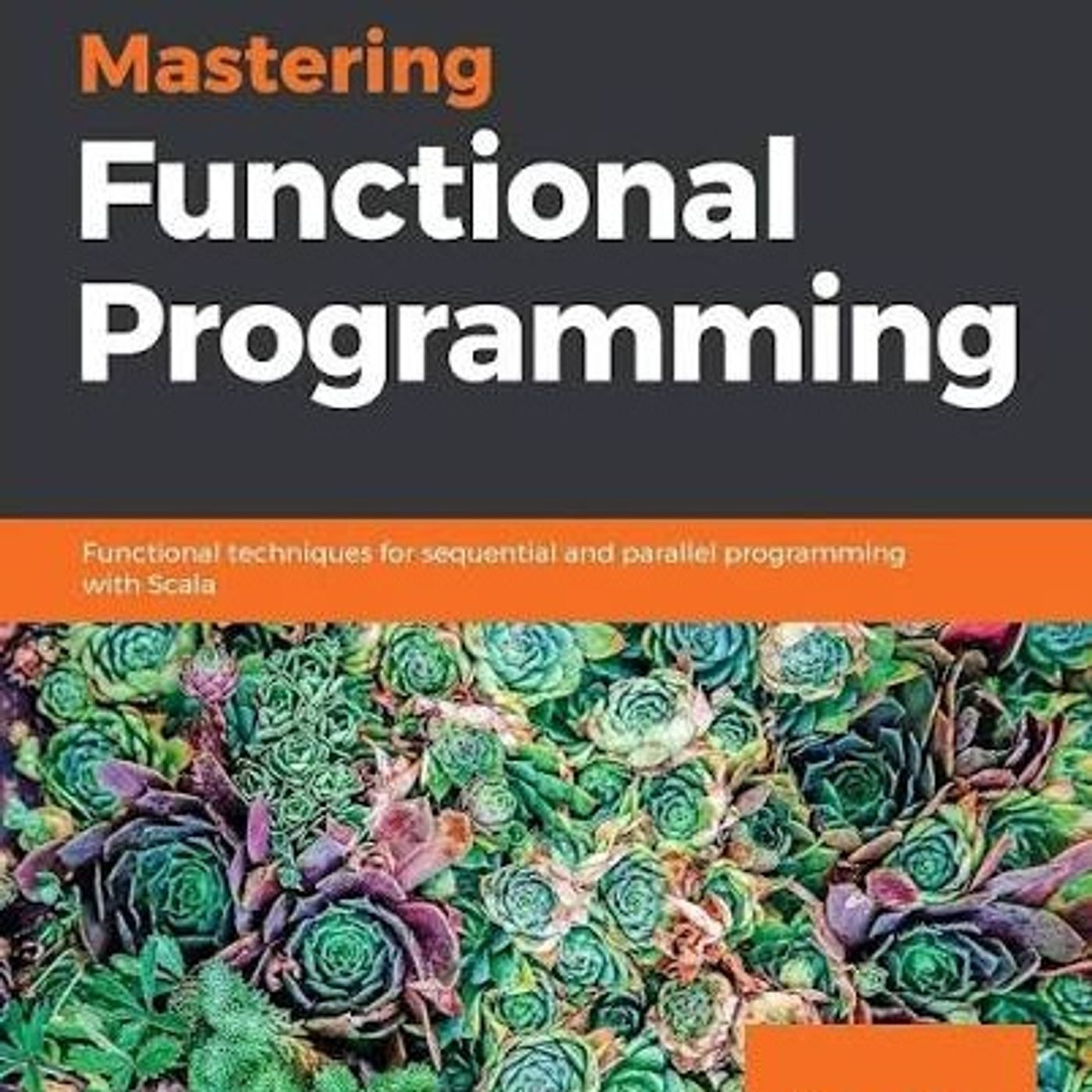
Mastering Functional Programming: Functional techniques for sequential and parallel programming with Scala
0:00-22:57
transcript
show notes
Introduce the core philosophy and practical advantages of the functional paradigm using Scala. The text contrasts imperative programming, which relies on step-by-step algorithms and mutable states, with declarative programming, which focuses on high-level mathematical expressions and algebraic reasoning. A significant portion of the material examines the detrimental impact of side effects, such as exceptions and shared mutable data, which increase a developer's mental workload and lead to bugs. To resolve these issues, the author advocates for pure functions and referential transparency, where code behaves predictably without modifying the external environment. The text also explains how functional data structures like Option, Try, and Future reify phenomena into data, allowing for safer error handling and asynchronous operations. Ultimately, the source serves as a guide for building robust, fault-tolerant systems by abstracting away low-level complexities through elegant functional techniques.
You can listen and download our episodes for free on more than 10 different platforms:
https://linktr.ee/cyber_security_summary
Get the Book now from Amazon:
https://www.amazon.com/Mastering-Functional-Programming-techniques-programming/dp/1788620798?&linkCode=ll2&tag=cvthunderx-20&linkId=bf2f96f903dbda6f2db1646b81188cf2&language=en_US&gaOptInStatus=true&ref_=as_li_ss_tl
Discover our free courses in tech and cybersecurity, Start learning today:
https://linktr.ee/cybercode_academy
You can listen and download our episodes for free on more than 10 different platforms:
https://linktr.ee/cyber_security_summary
Get the Book now from Amazon:
https://www.amazon.com/Mastering-Functional-Programming-techniques-programming/dp/1788620798?&linkCode=ll2&tag=cvthunderx-20&linkId=bf2f96f903dbda6f2db1646b81188cf2&language=en_US&gaOptInStatus=true&ref_=as_li_ss_tl
Discover our free courses in tech and cybersecurity, Start learning today:
https://linktr.ee/cybercode_academy
links3
- https://linktr.ee/cyber_security_summarylinktr.ee
- https://www.amazon.com/Mastering-Functional-Programming-techniques-programming/dp/1788620798?&linkCode=ll2&tag=cvthunderx-20&linkId=bf2f96f903dbda6f2db1646b81188cf2&language=en_US&gaOptInStatus=true&ref_=as_li_ss_tlamazon.com
- https://linktr.ee/cybercode_academylinktr.ee